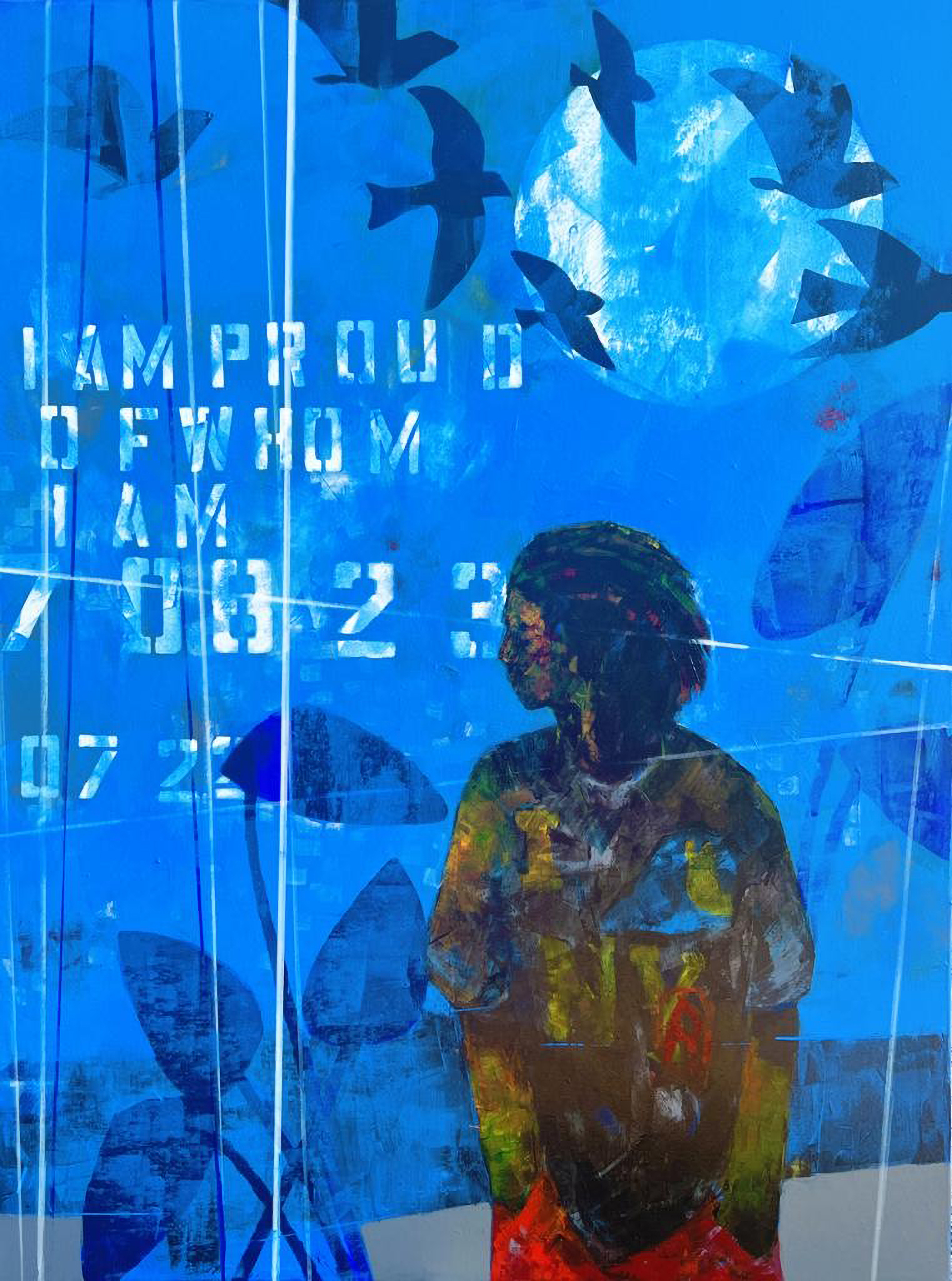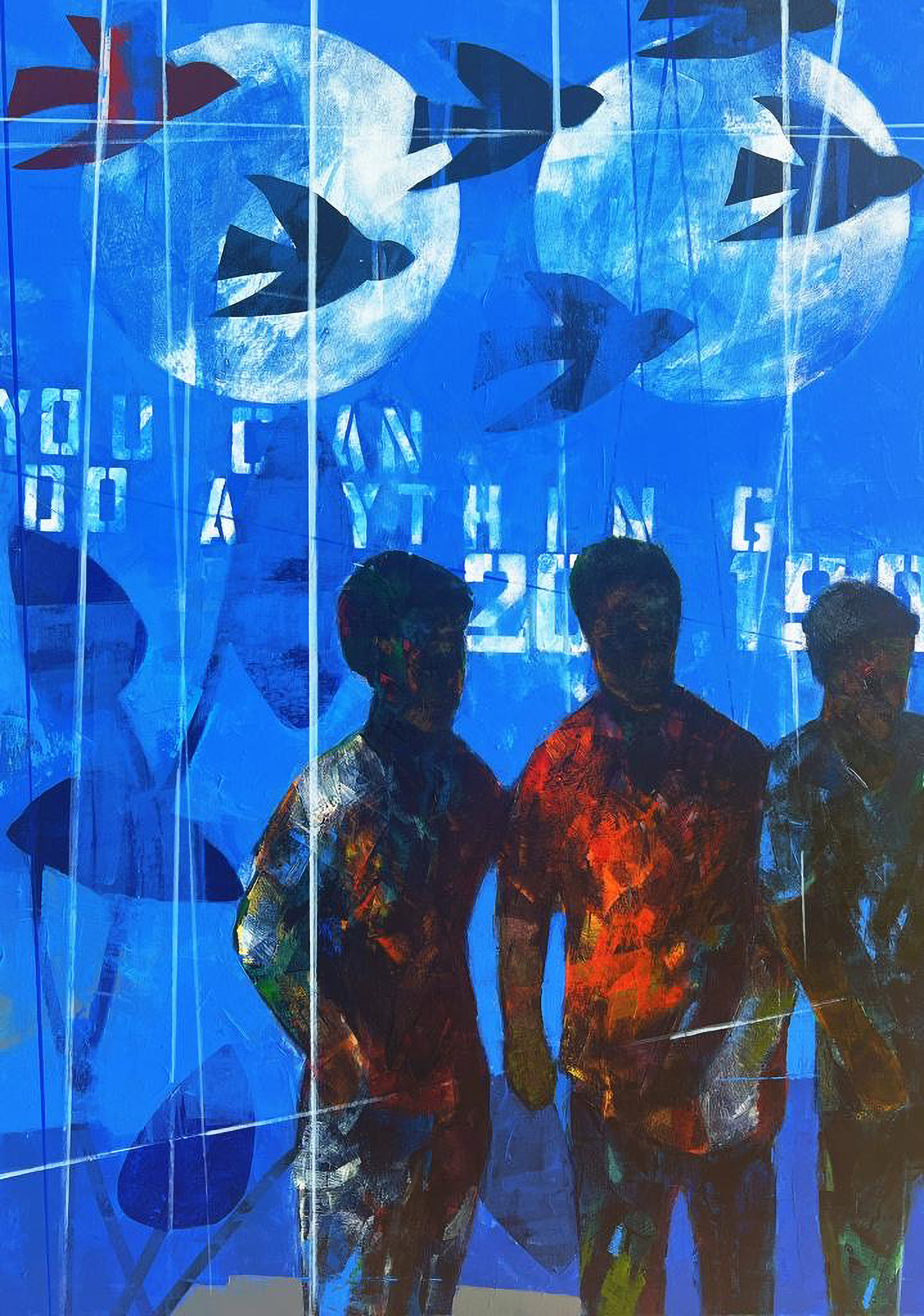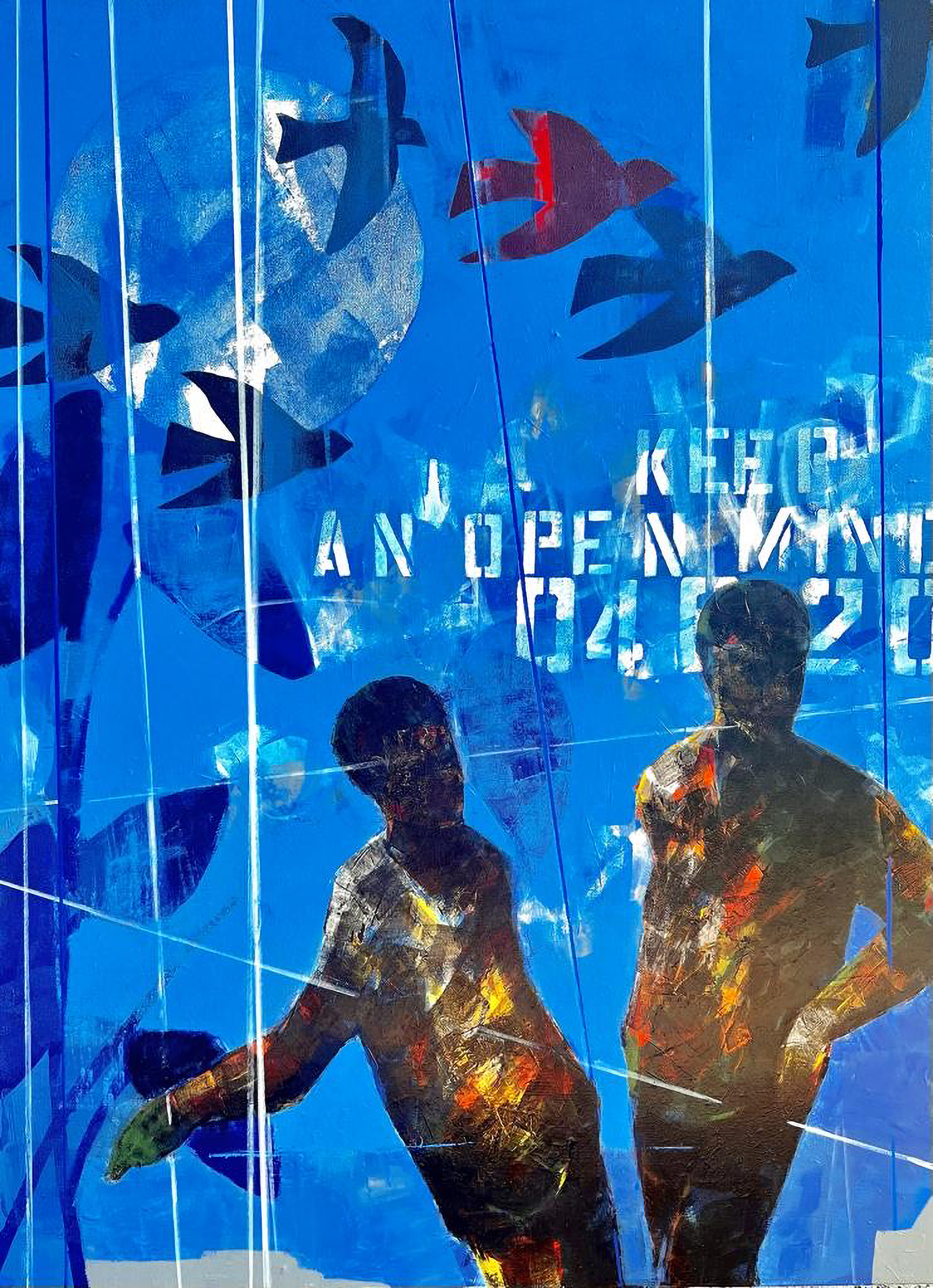
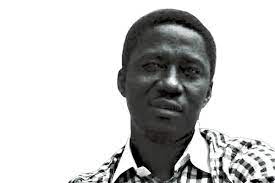
Ola Balogun born 1972, Lagos, Nigeria. Ola Balogun is a Nigerian contemporary artist whose practice is deeply shaped by his upbringing in the city of Lagos, one of the most densely populated and energetically charged urban environments in West Africa. The constant proximity to strangers, a defining condition of life in large metropolitan spaces, has played a fundamental role in shaping his artistic vision and thematic concerns. Growing up in Lagos, Balogun was immersed in a continuous flow of human interaction, movement, and unpredictability. This urban intensity became a key source of inspiration, influencing both the emotional tone and narrative direction of his work. The city, with its layered social dynamics and constant negotiation between anonymity and intimacy, remains a central reference point throughout his practice. He graduated from the Department of Art at the Federal Polytechnic, Auchi in 1999, an institution known for its strong emphasis on color expression and formal experimentation. This academic environment had a significant impact on his early artistic development, particularly in shaping his sensitivity to chromatic intensity, composition, and visual rhythm. After graduating, Balogun became part of the artist collective De Factori Studio, a group of artists who shared similar artistic interests and worked collaboratively. Within this collective context, he developed and exhibited works influenced by shared discussions around form, abstraction, and contemporary African visual identity.
Despite this collaborative phase, Balogun gradually felt the need to pursue a more personal and introspective artistic language. This desire for individual expression led him to a continuous process of evolution, both conceptually and formally. Over time, his canvases became increasingly minimal and reduced, moving away from dense pictorial narration toward a more refined exploration of line, space, and essential form. This shift also affected the way he constructs meaning in his work. While the presence of the urban environment and encounters with strangers remains central, its function has transformed. In his earlier practice, Balogun focused on individual figures and their specific stories, capturing personal narratives within the urban crowd. In his more recent works, however, these encounters are no longer treated as isolated stories, but as points of departure for broader reflections on universal human conditions.
His contemporary practice engages with themes such as fear, love, desire, and emotional tension, using the city not as a literal subject, but as a symbolic field of human experience. The emphasis shifts from the anecdotal to the essential, from the visible story to the underlying structure of meaning. Today, Balogun continues to work with the experience of the big city, but approaches it as a space of extraction and reflection. The individual narratives he once depicted remain present, yet they are now integrated into a more conceptual framework in which what matters most are the universal truths that emerge from everyday encounters. In this sense, his work transforms urban experience into a meditative exploration of human existence, perception, and emotional depth.