
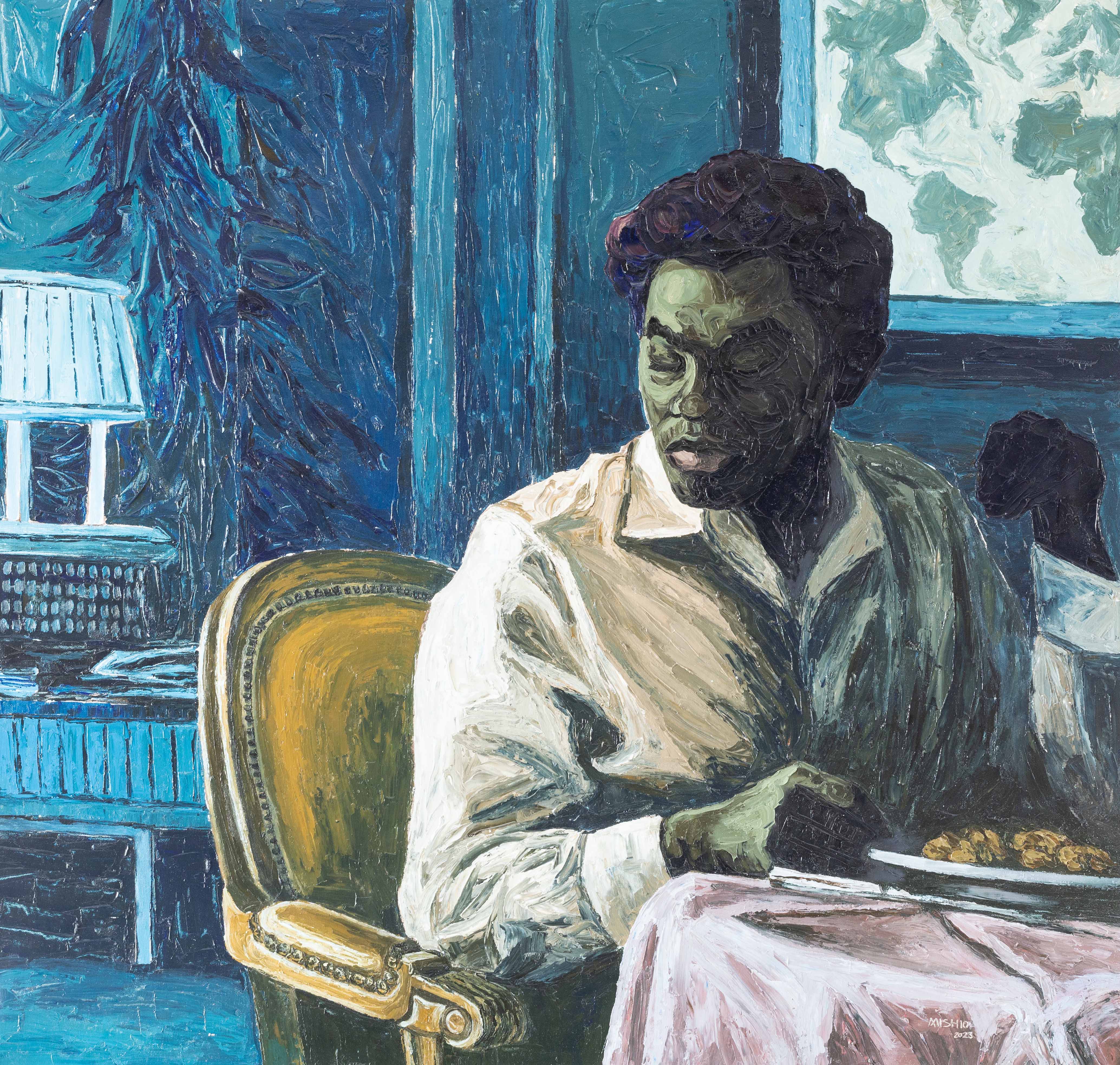
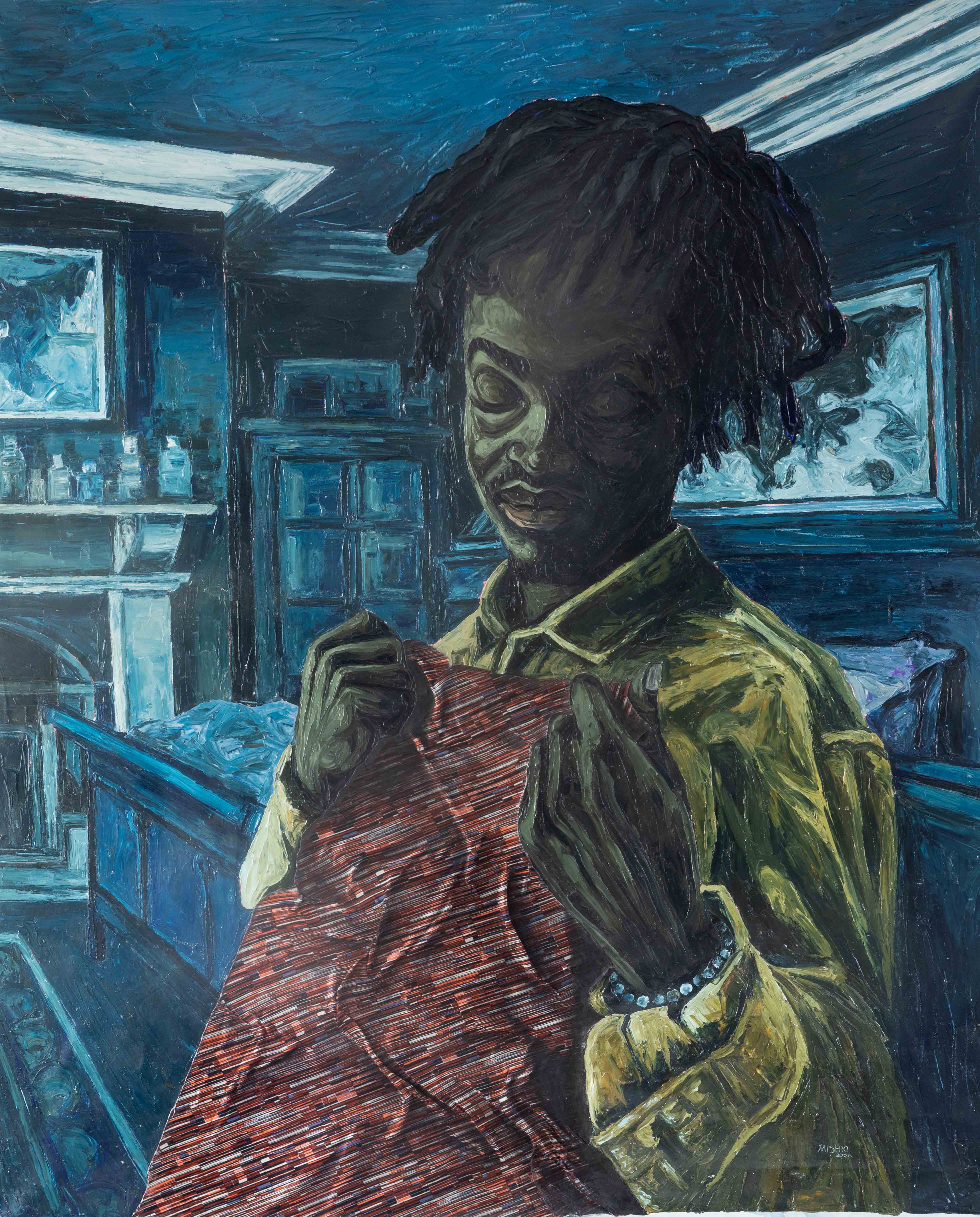
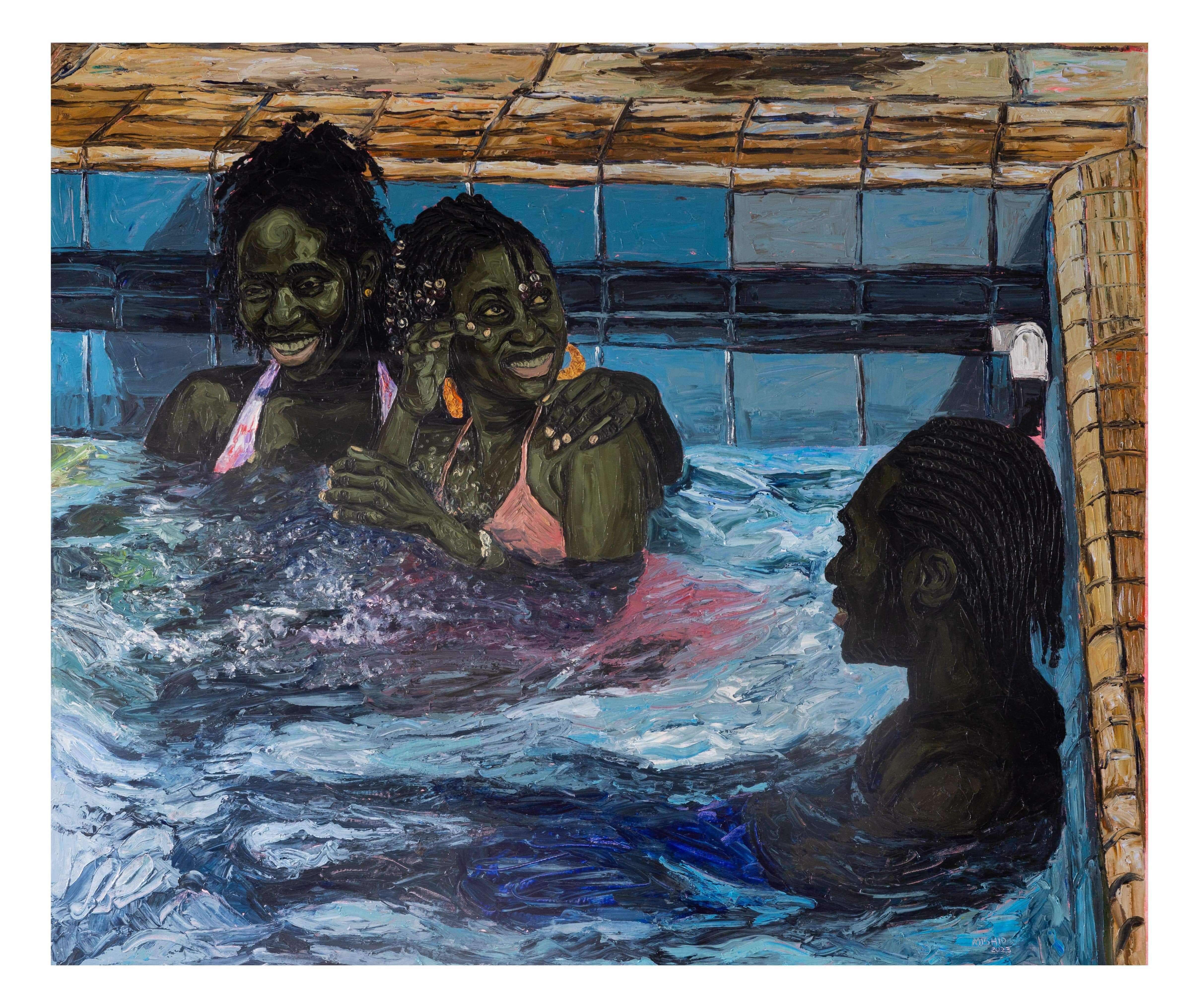
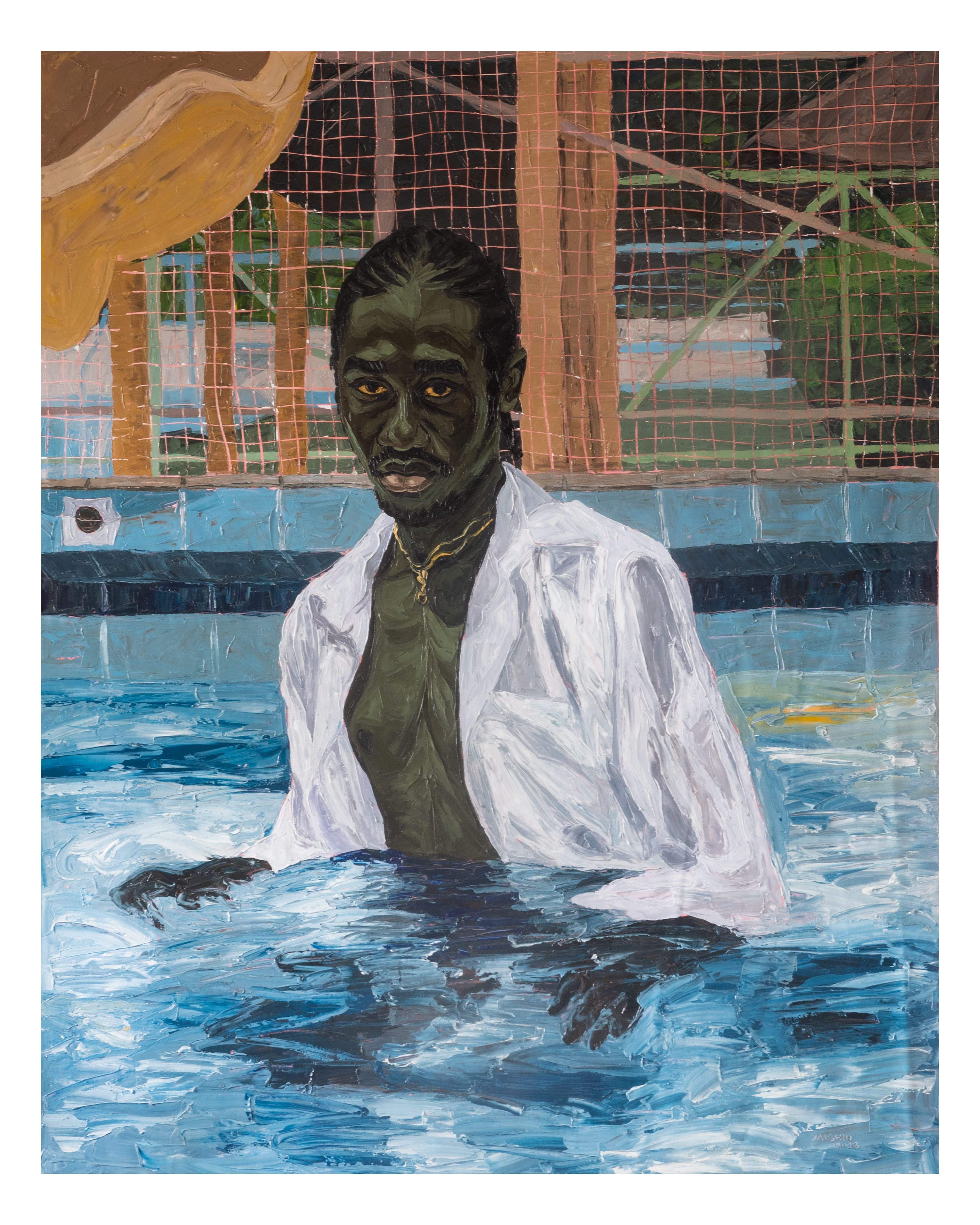
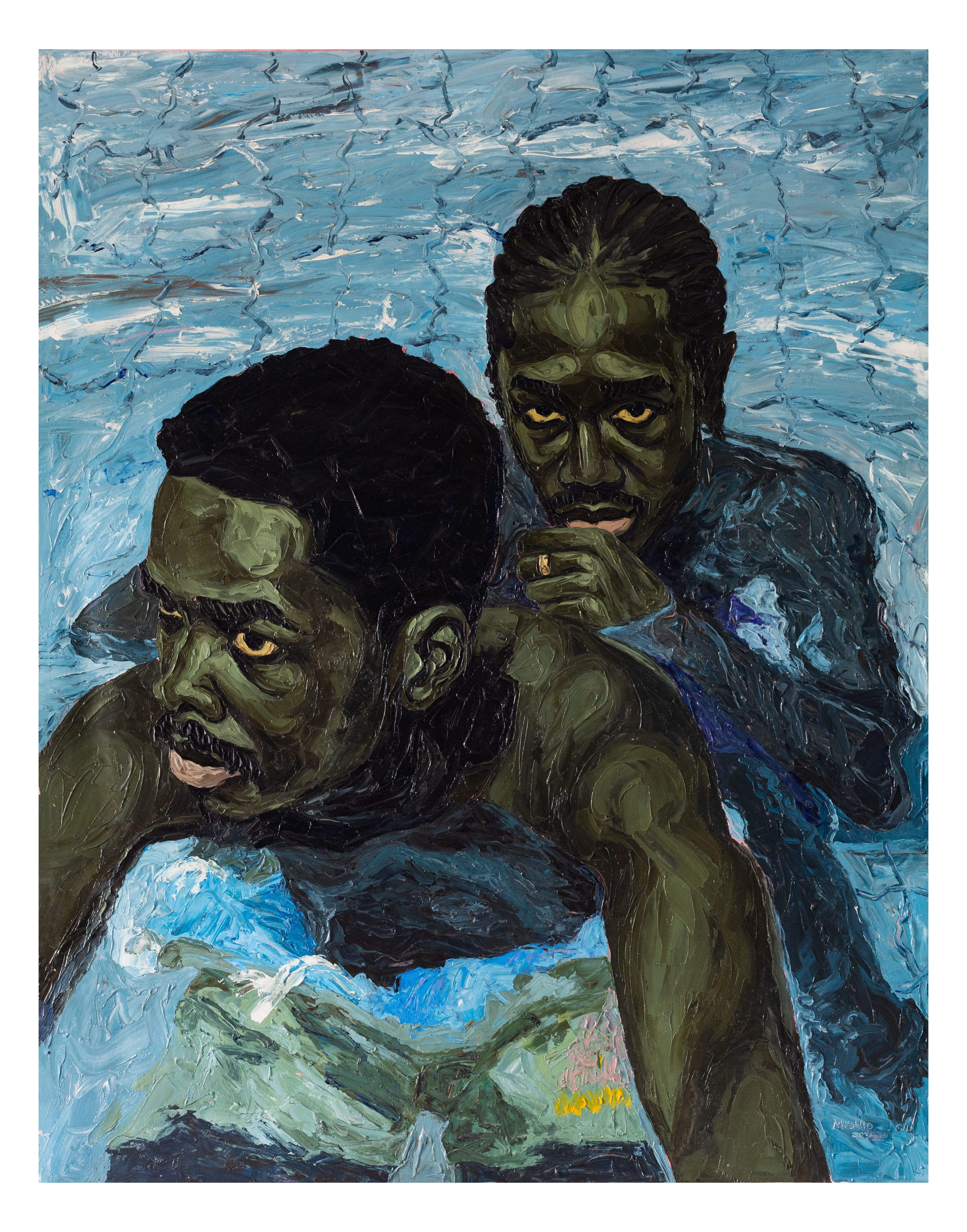
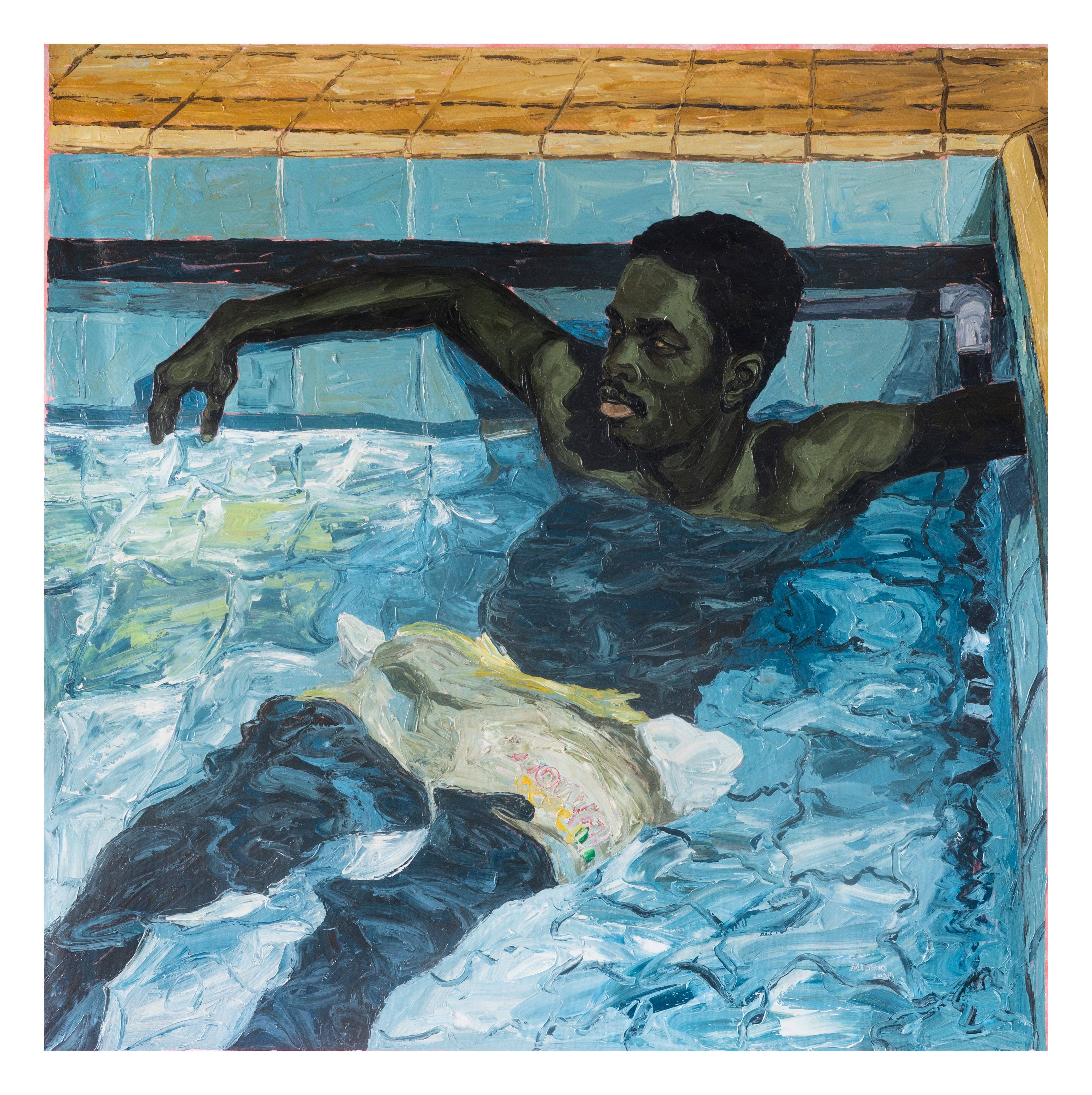
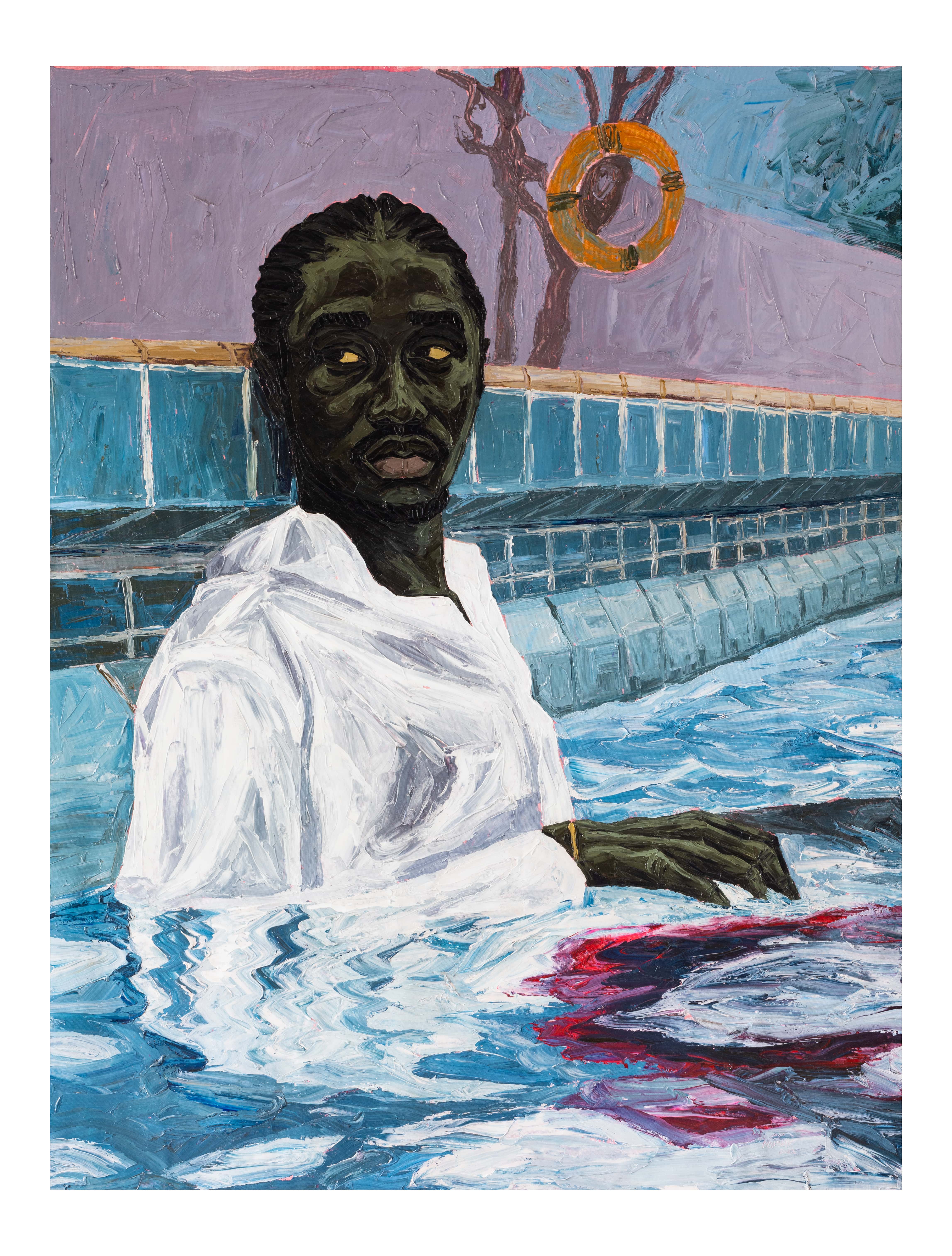
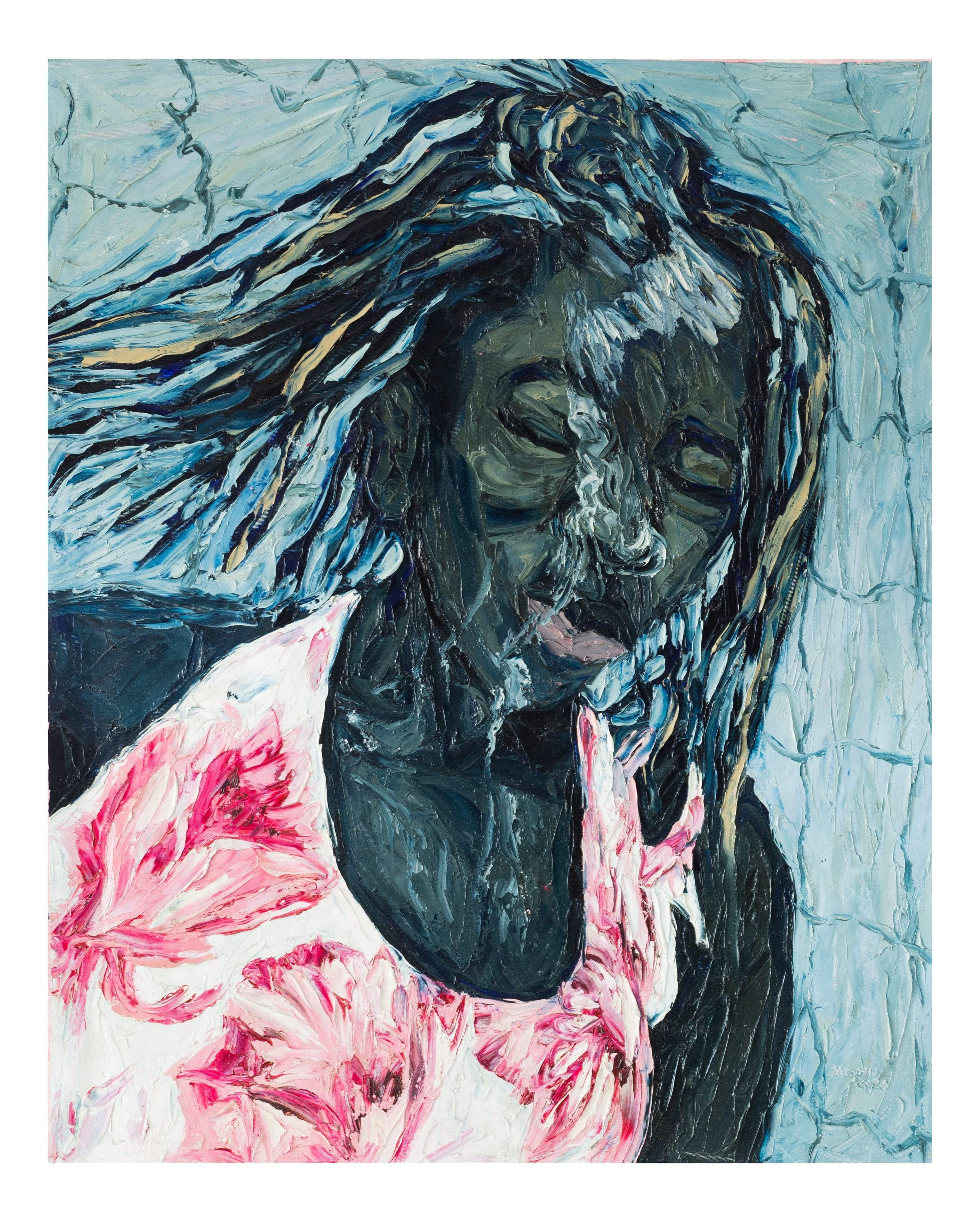
James Mishio (born in 1997) is a Ghanaian artist who lives and works in Accra, Ghana. His practice is deeply informed by the social dynamics of his environment, engaging with questions of identity, perception, and belonging within contemporary African society. “Many people in my society discriminate against men with certain hairstyles, associating them with criminals or social threats. I found inspiration for my IDENTITY series in Ahmad Cissé, in his freedom of expression and his ability not to be limited. Faced with the labels imposed on me and the limitations tied to my hairstyle, I sought figures who could inspire me to live without being judged or excluded. This led me to develop a series dedicated to strong Black men who challenge stereotypes and prejudice in order to affirm their identity. My aim is to help change this narrative, so that men with dreadlocks can feel accepted and have equal opportunities.”
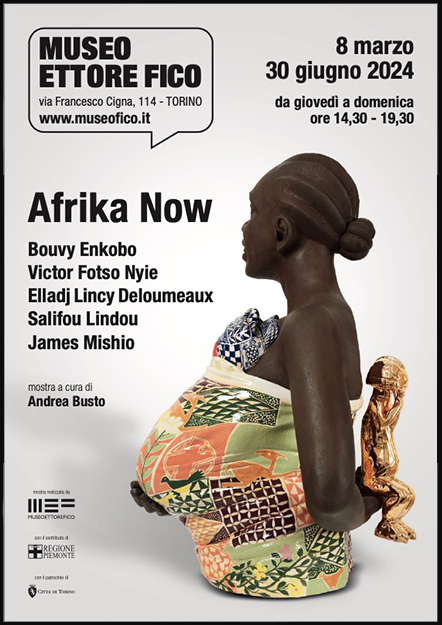
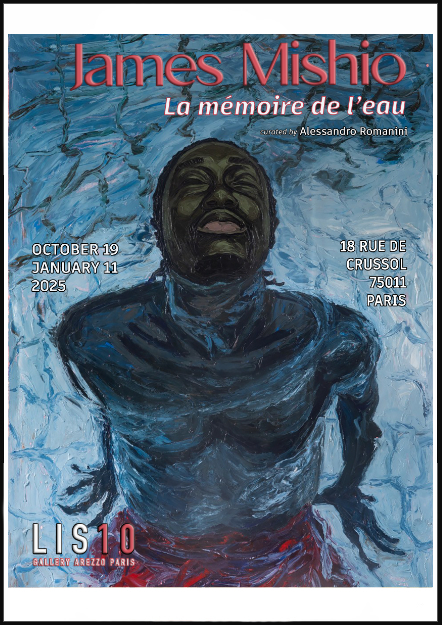
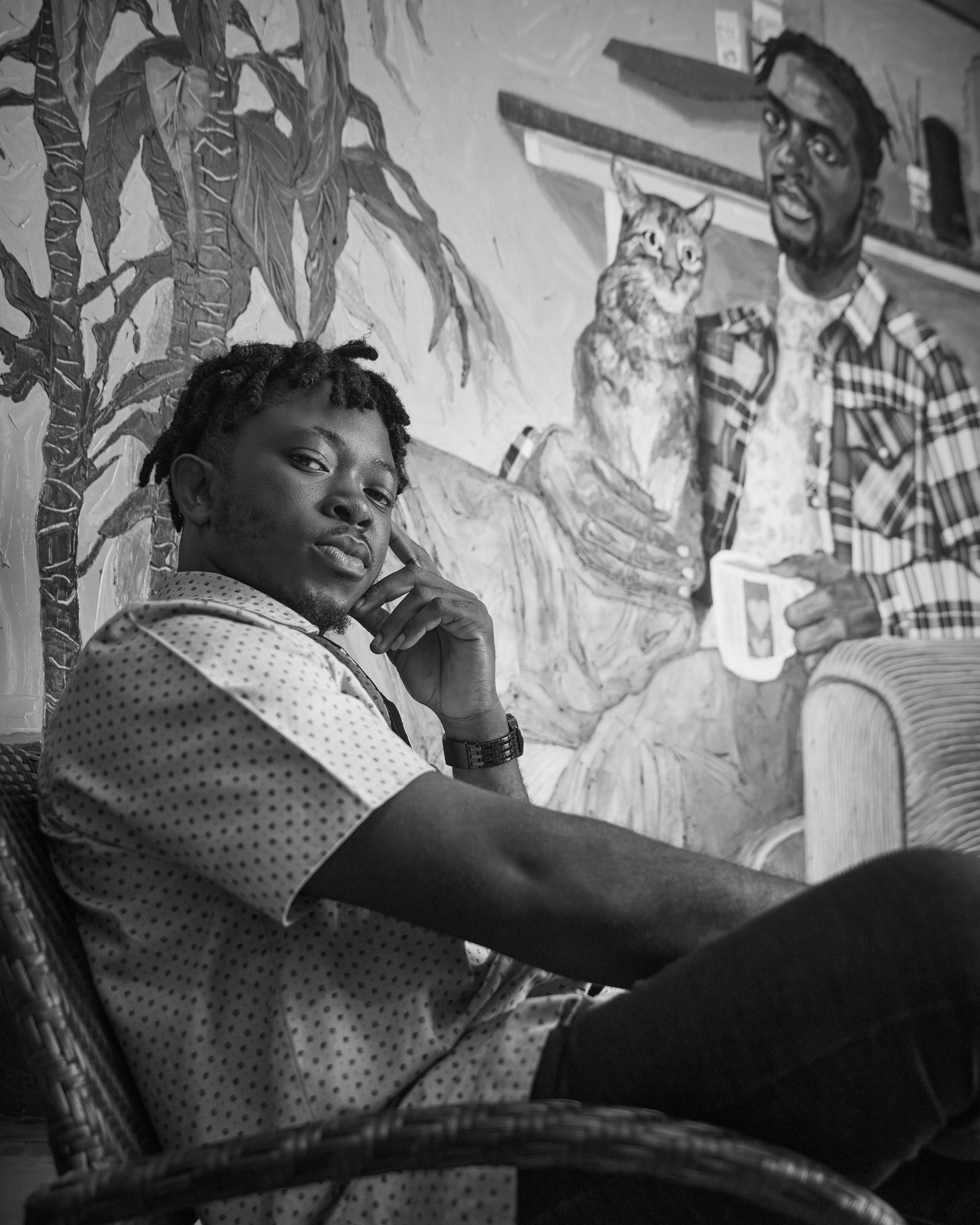
At the core of Mishio’s work is a sensitive exploration of the humanity of his subjects. His paintings convey a strong sense of presence and familiarity, built through an attentive observation of gestures, attitudes, and individual character. The use of a dense, textured impasto creates a tactile surface that enhances the emotional proximity between the viewer and the subject. His practice is grounded in a continuous experimentation with materials and techniques, combining oil and fabric on canvas. The treatment of skin through oil paint emphasizes the richness and depth of African identity, as well as the histories and lived experiences embedded within it. Mishio’s works are held in private collections and have been presented in international contexts, including Birds of a Feather at Phillips Auction House in London. Central to his research is the theme of human communication, particularly through the gaze, which he considers a direct and powerful vehicle of connection and understanding.
A self-taught artist, Mishio has developed his visual language through a close and sustained engagement with his surroundings. His work emerges from everyday observation and a process of introspection, translating lived experience into layered visual narratives. Through portraiture and figuration, he constructs a community of individuals, each carrying a distinct presence while contributing to a shared social landscape. The studio, in this sense, becomes more than a site of production: it is a space for reflection and transformation, where reality is processed, reinterpreted, and ultimately translated into image.