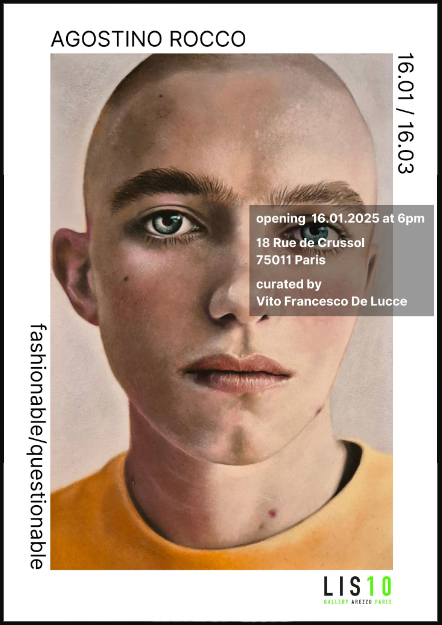
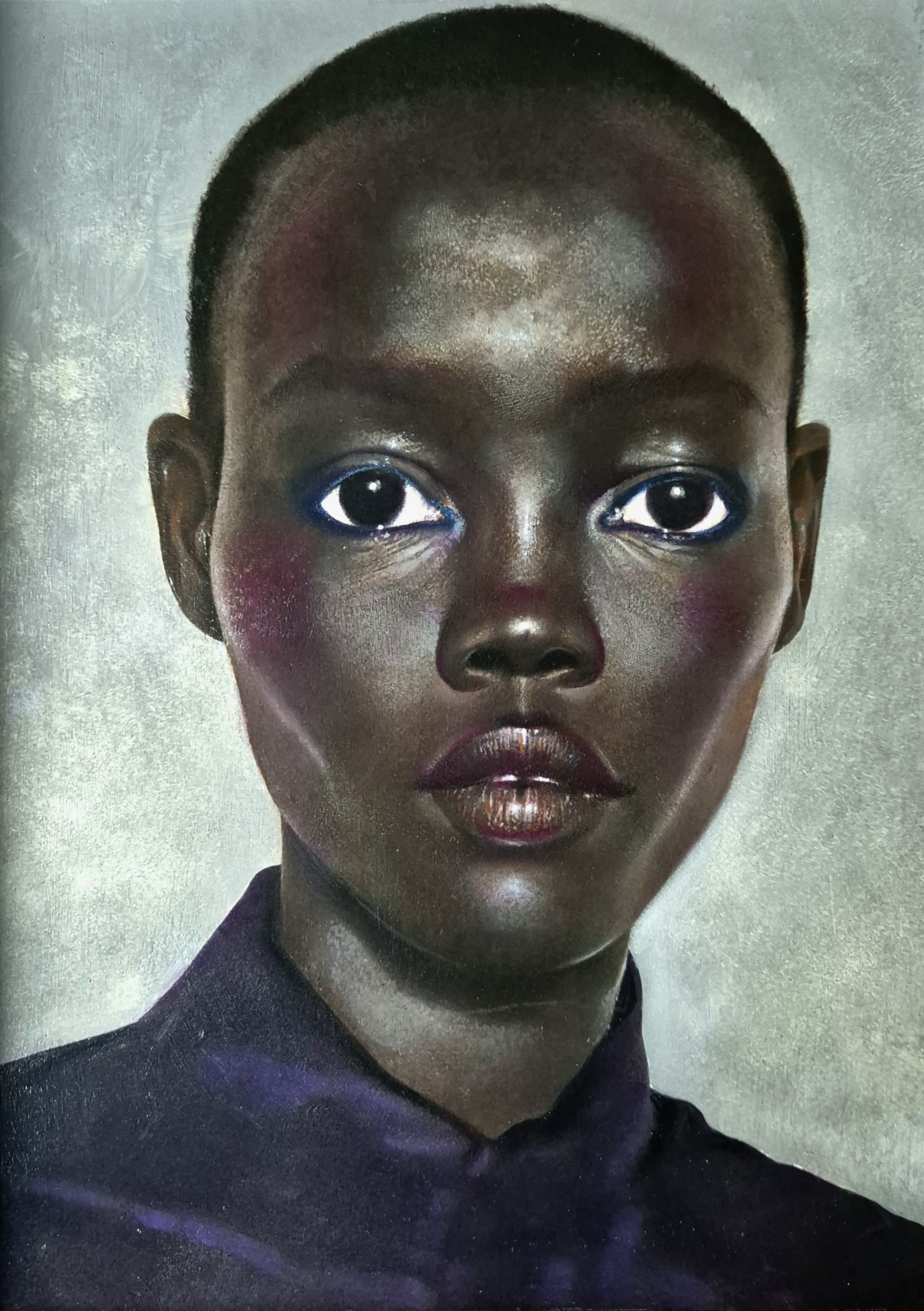
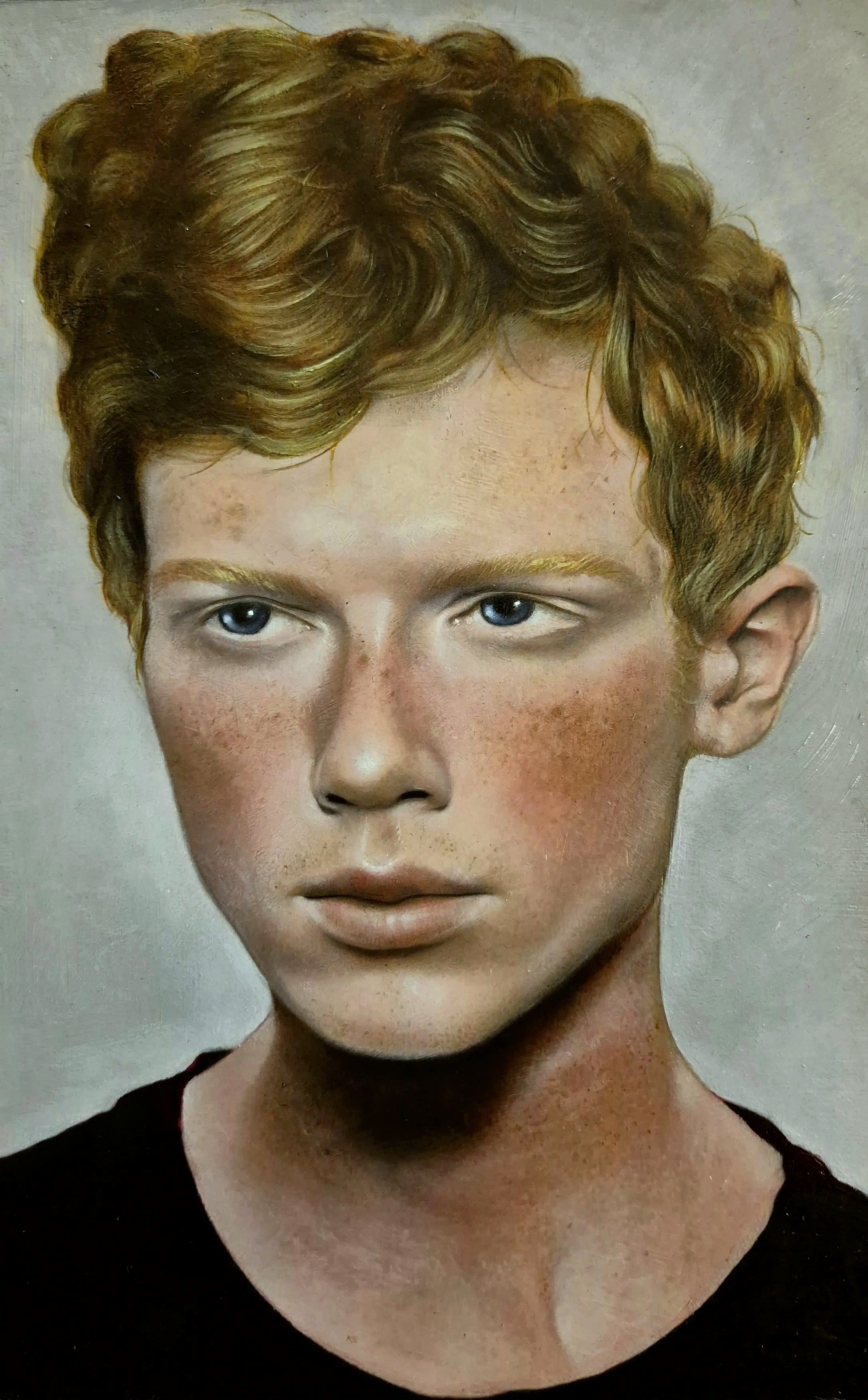
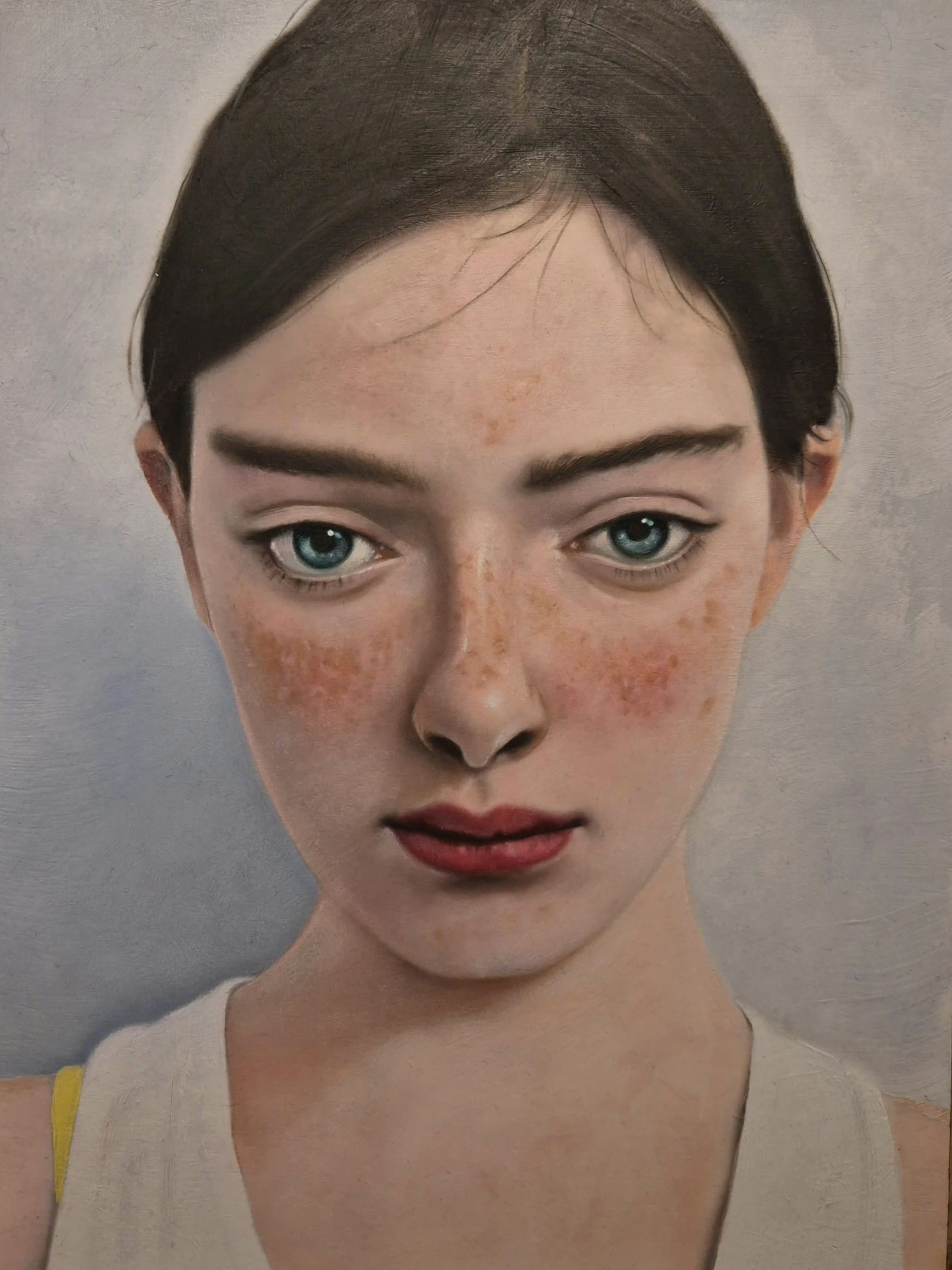
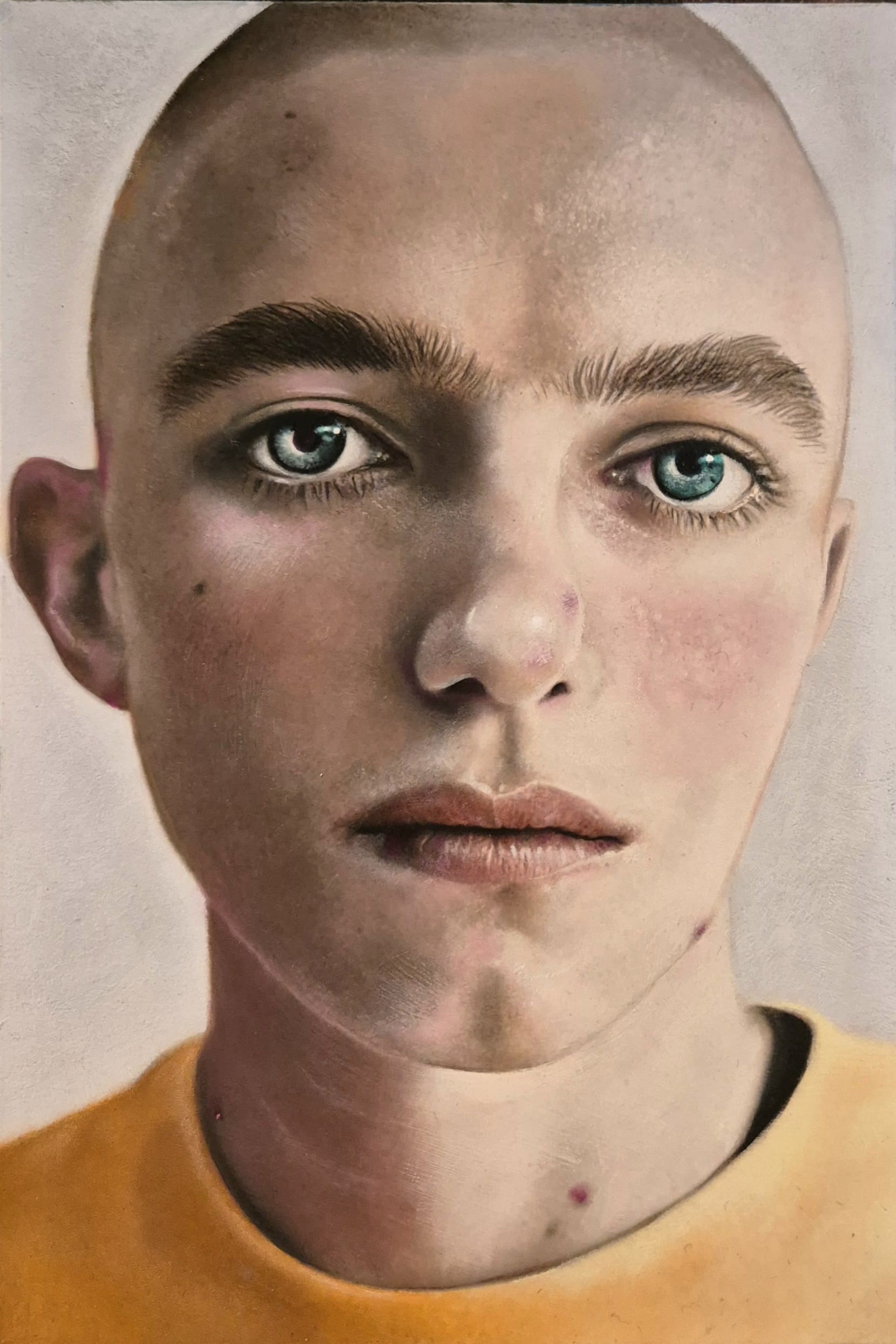
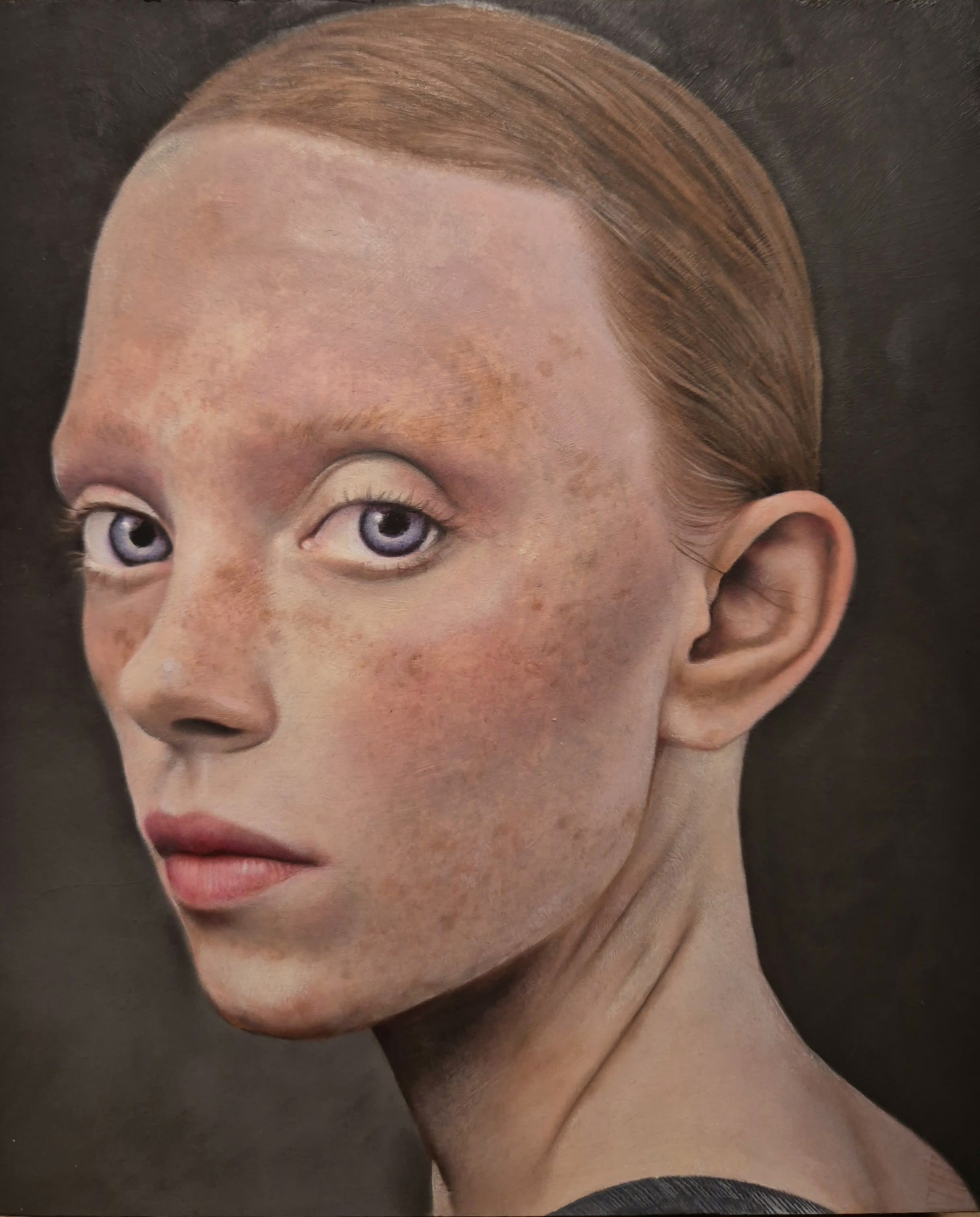
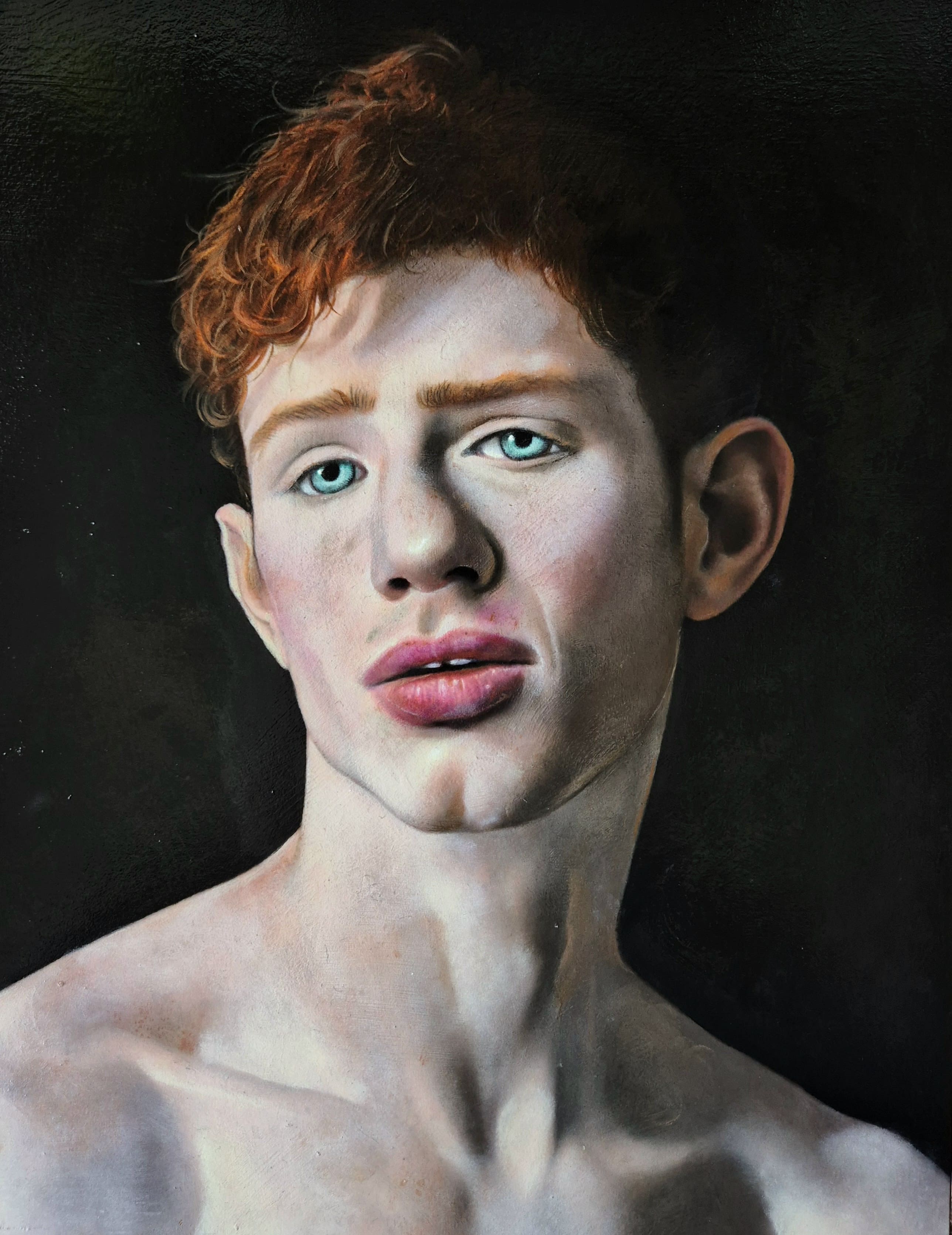
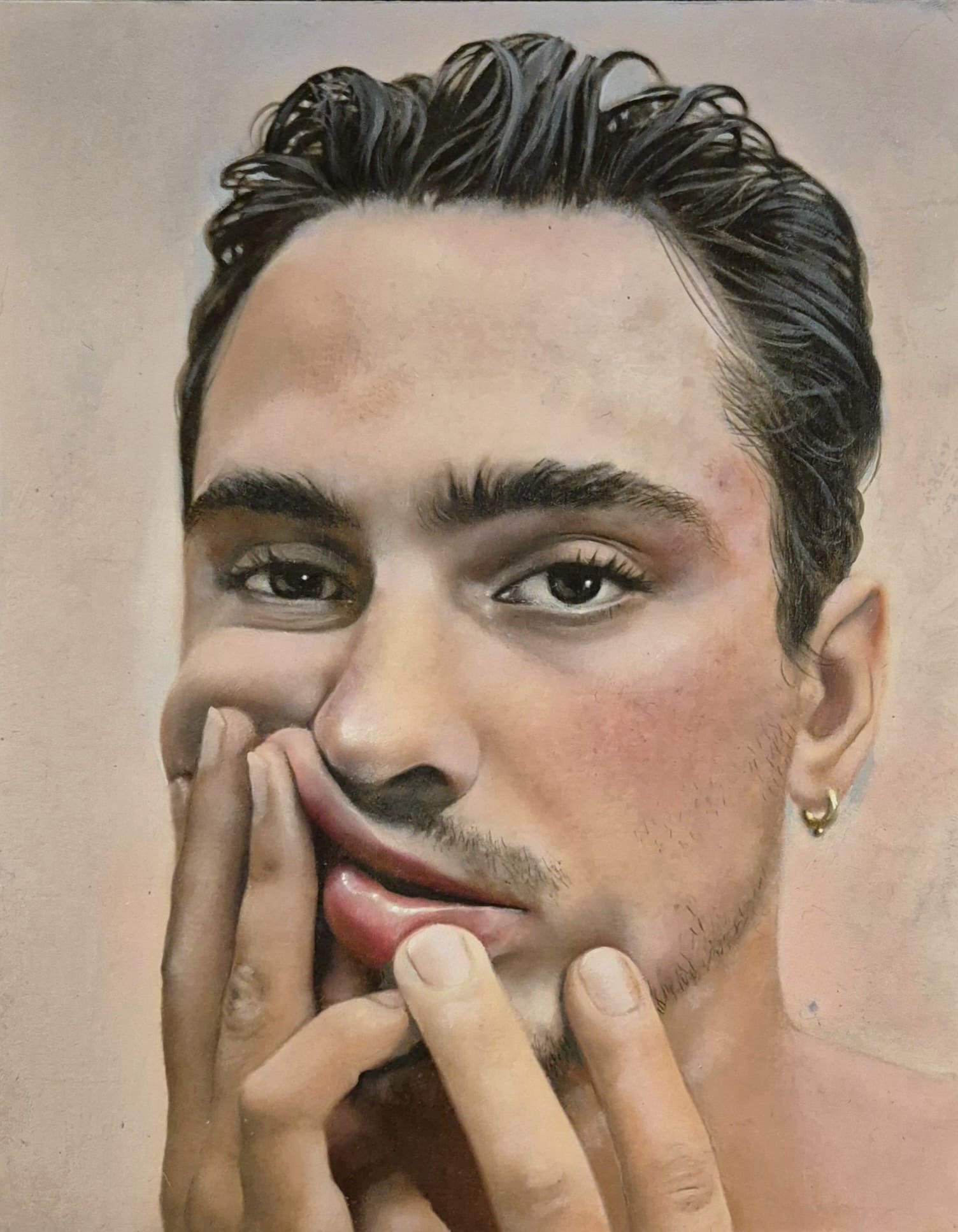
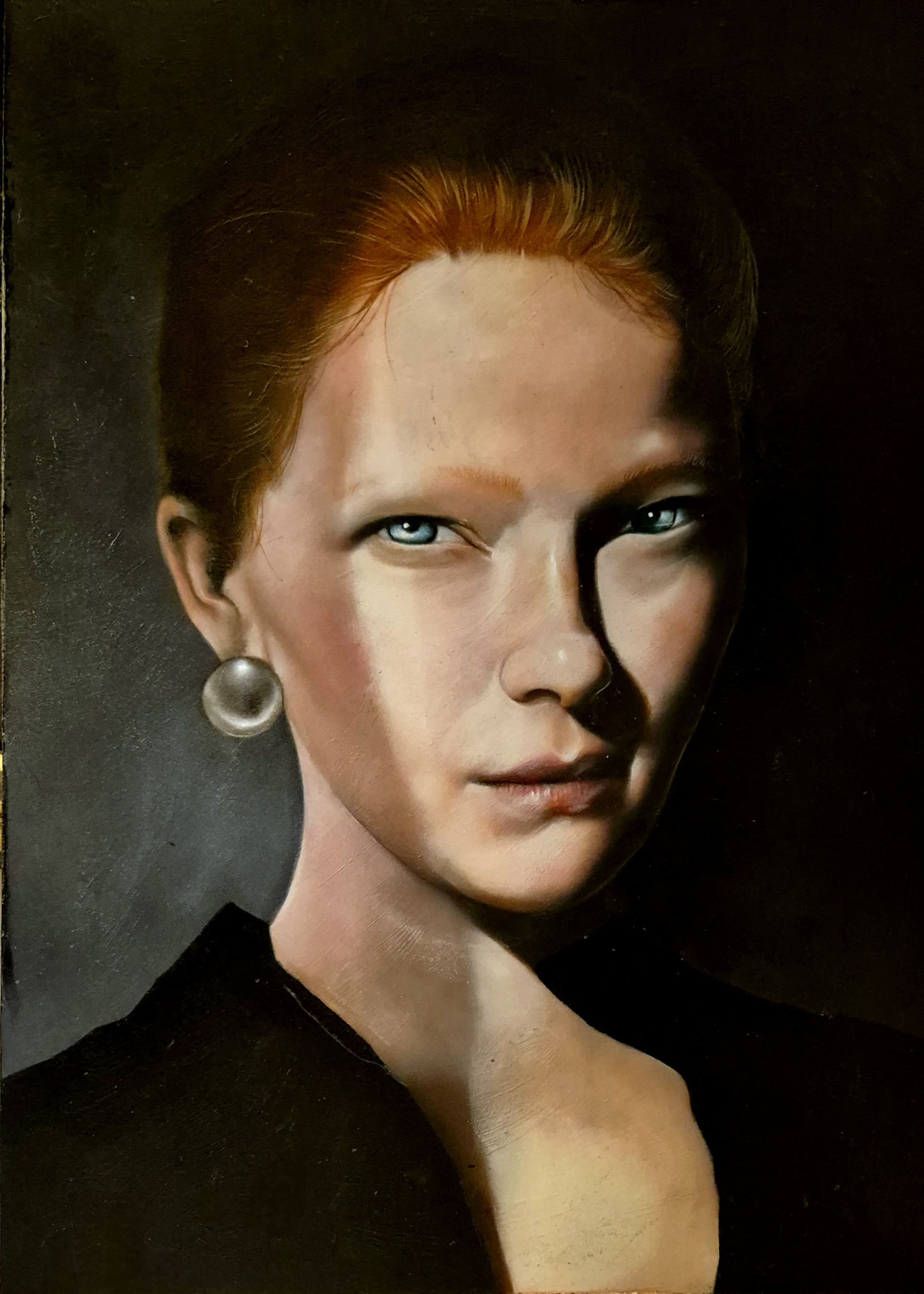
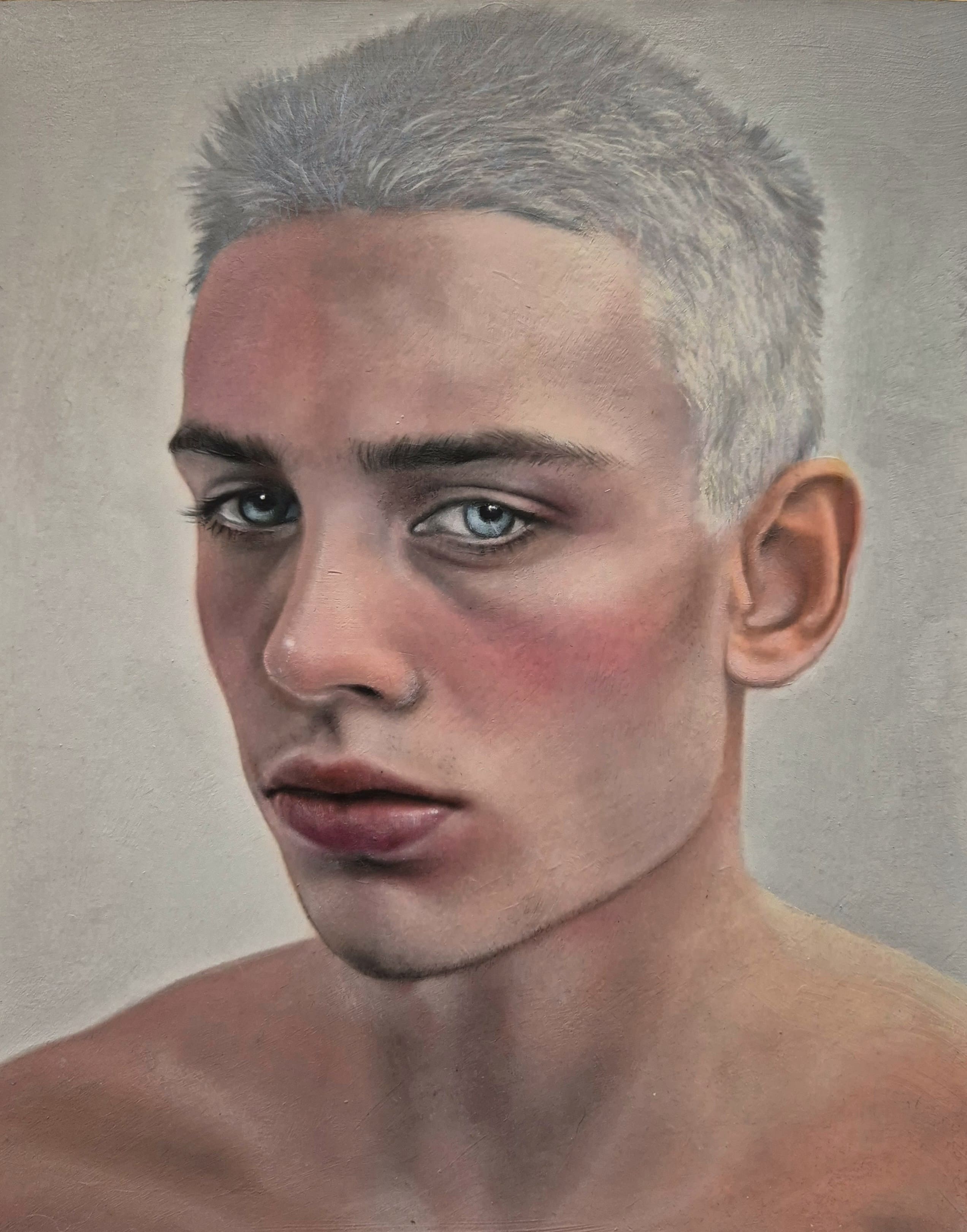
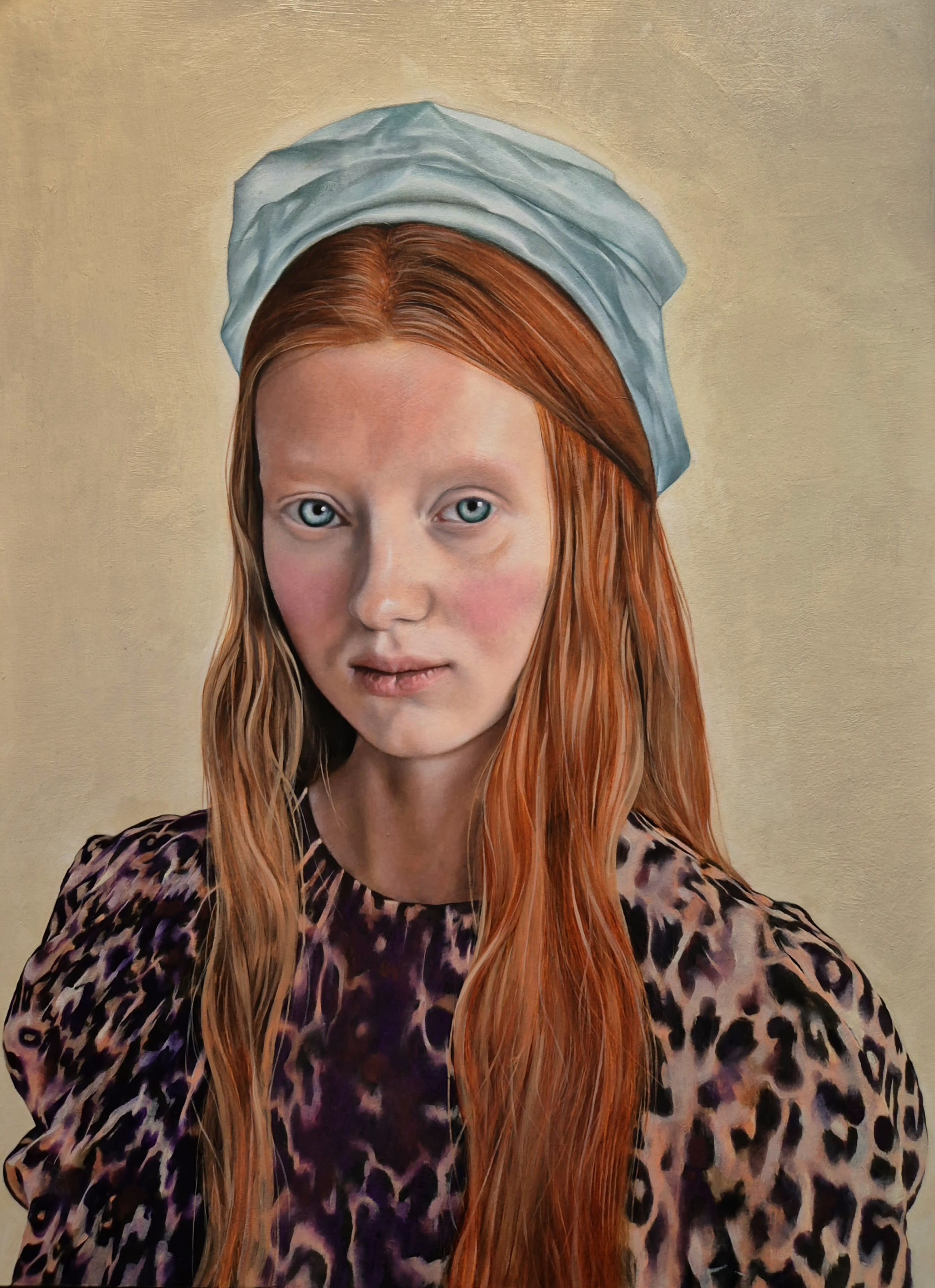

Agostino Rocco born 1990 Italy is a contemporary artist whose technically refined works are rooted in the portrait tradition, characterized by a strong historical atmosphere and a sense of sobriety. At first glance, his paintings appear classical and formally composed, almost anchored in academic painting. However, on closer inspection they reveal a more complex and subversive dimension: a subtle layer of humour, unexpected anachronisms, and visual displacements that challenge the viewer’s assumptions while maintaining a strong seductive quality.
Rocco’s practice is defined by this tension between eras. He moves fluidly between two worlds: the language of classical portraiture and a contemporary visual grammar that revisits and transforms historical imagery. Rather than simply referencing the past, he actively reconstructs and reinterprets it, producing works that feel both familiar and destabilizing. The core of his artistic research is represented by a series of paintings inspired by Pierre-Paul Prud’hon’s Portrait de jeune homme, preserved at the Louvre Museum. In this series, Rocco engages in a sustained process of reinterpretation, reworking Prud’hon’s image through a progression of increasing distortions that gradually detach the work from its original form while still preserving its conceptual essence.
This method recalls the obsessive reconfigurations of classical imagery by Francis Bacon, particularly his engagement with Diego Velázquez’s Portrait of Innocent X. Like Bacon, Rocco builds a visual cycle in which repetition becomes transformation, and distortion becomes a form of homage.In this way, Agostino Rocco’s work exists in a delicate balance between respect for tradition and deliberate rupture, offering classical images that are continuously revisited, unsettled, and reimagined through a distinctly modern sensibility.