
Ebenezer Samuel Akinola, born 1968 Ibadan, Nigeria. Ebenezer Samuel Akinola is a contemporary Nigerian artist whose practice is rooted in a critical reflection on history, identity, and post-colonial narratives. As he states, “As a black man, the criticality of the subjects of slavery and colonization is as familiar as my middle name.” His work engages directly with the complex and often contested histories of slavery, colonization, and racial representation. Traditionally, these histories are often framed through a binary perspective in which the European figure is positioned as the antagonist. However, Akinola proposes a more nuanced and reflective reading, suggesting the possibility of a reconstructed line of thought that allows for a form of critical empathy, even toward the historical “Whiteman,” without denying the moral weight of colonial violence. His approach acknowledges that slavery was already an established system in Africa prior to European intervention, a historical reality documented in numerous sources. While he maintains that the immorality of the transatlantic slave trade is unquestionable, he also argues that colonial systems often operated by integrating and expanding pre-existing economic structures rather than creating them entirely from scratch.
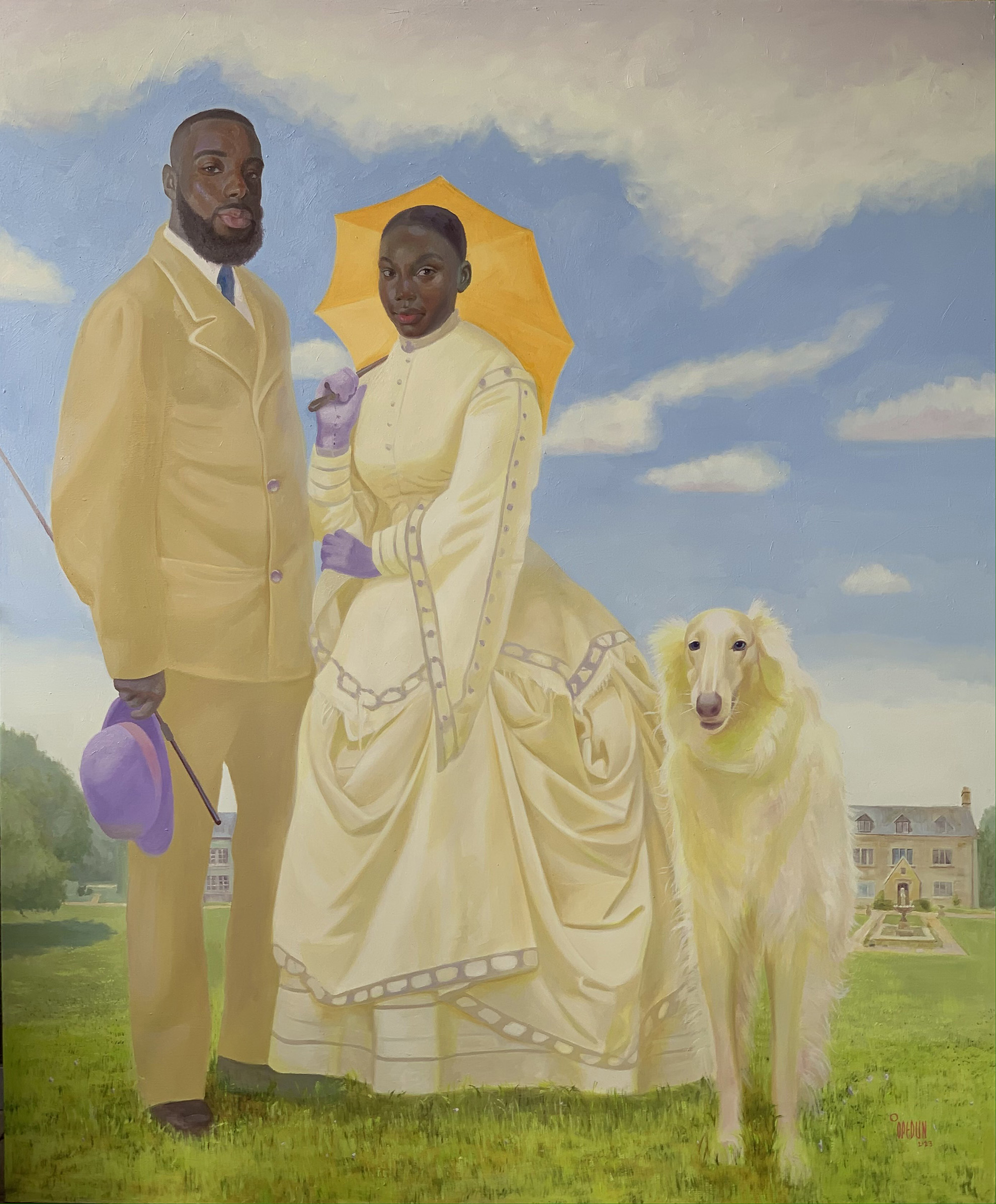
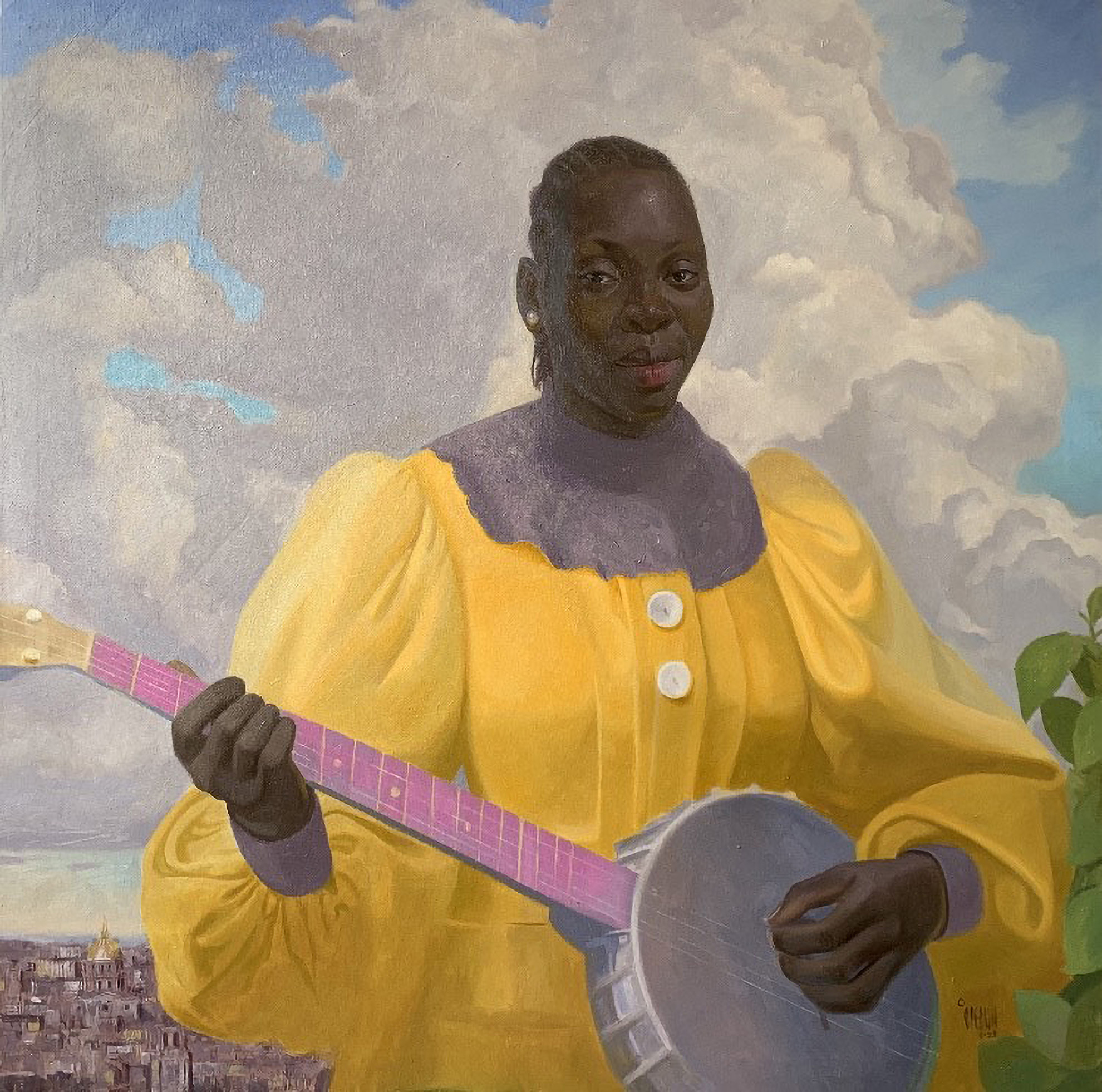
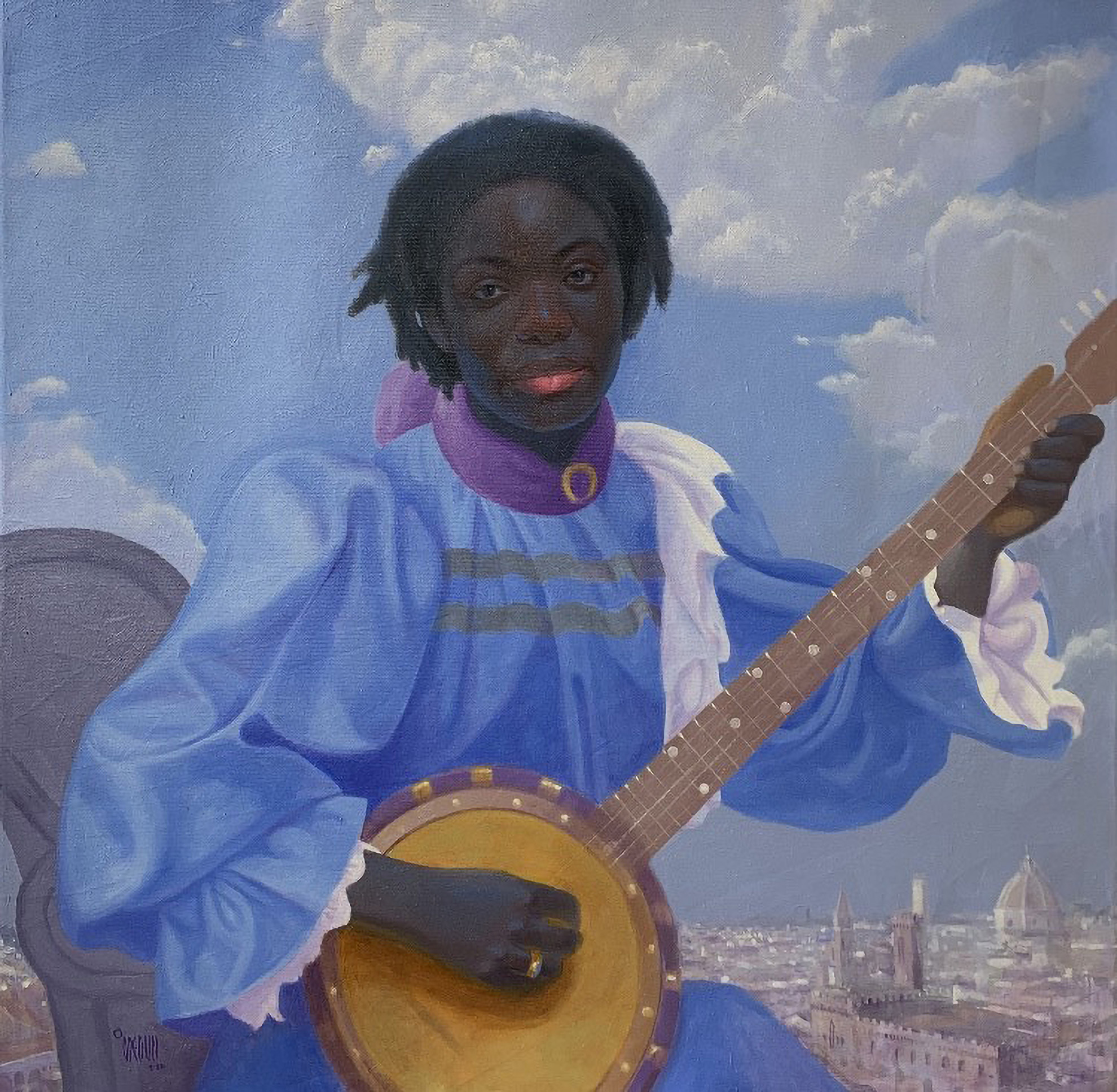
Within this framework, Akinola reflects on the idea of human ambition as a universal force, suggesting that the drive for expansion, labor organization, and economic growth is not exclusive to any single race or culture. He raises the question of whether Africans, in similar economic positions, might have acted in comparable ways. This perspective leads him toward a broader conceptual idea of “human architecture”, in which humanity is understood as fundamentally shared, rather than divided by racial or colonial hierarchies. While he acknowledges that such a stance may be controversial or uncomfortable within dominant historical discourses, he positions it as a necessary point of reflection rather than a definitive conclusion. Visually, this body of work operates as a dual conceptual structure. On one level, it invites Western viewers to encounter the African subject through a lens of familiarity and classical European visual codes, creating a sense of recognition and shared humanity. The use of traditional Western-style garments and imagery functions as a mediating device, intended to evoke connection, empathy, and symbolic equality between cultures. On another level, the work incorporates contemporary cultural references, most notably Khaby Lame, the Senegalese-born Italian social media personality. His global popularity is based on his ability to communicate complex ideas through silent, simplified gestures, making abstract or “complicated” narratives immediately accessible. For Akinola, Khaby Lame embodies the idea that complex systems of thought can be deconstructed into clarity and simplicity.
The artist also references Andy Warhol, drawing a parallel between his engagement with Marilyn Monroe as a pop culture icon and Akinola’s own use of contemporary figures and historical symbols. Additionally, he incorporates the image of Benjamin Franklin, one of the founding fathers of the United States, as a symbol of institutional legacy, ideology, and historical construction of power. These references function as a visual dialogue between popular culture, history, and political thought. Through this layered visual strategy, Akinola aims to construct a narrative in which unity, tolerance, and shared human identity become central values. His work calls for a shift in perspective toward a form of collective consciousness based on coexistence and mutual recognition, rather than division. Finally, his practice also addresses contemporary social realities, particularly the increasing movement of Nigerians and Africans migrating to Europe and other parts of the world in search of better economic opportunities. In response, he emphasizes the importance of economic autonomy, land ownership, and local investment, arguing that securing resources within one’s place of origin is a way of achieving stability, empowerment, and long-term independence rather than victimhood. In this sense, Akinola’s work functions simultaneously as historical reflection, political commentary, and socio-economic critique, aiming to open space for dialogue around identity, responsibility, and global interconnectedness.