
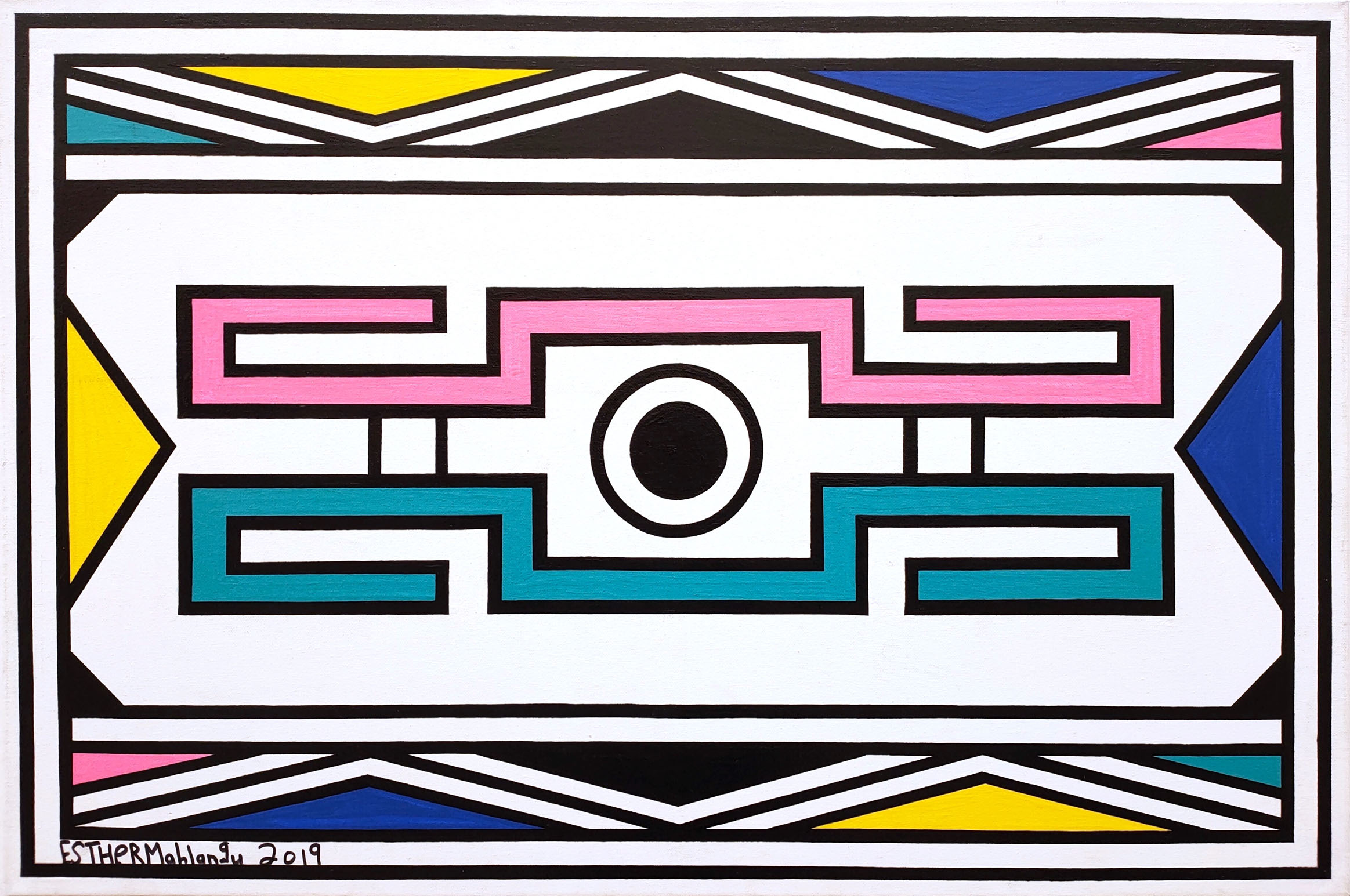
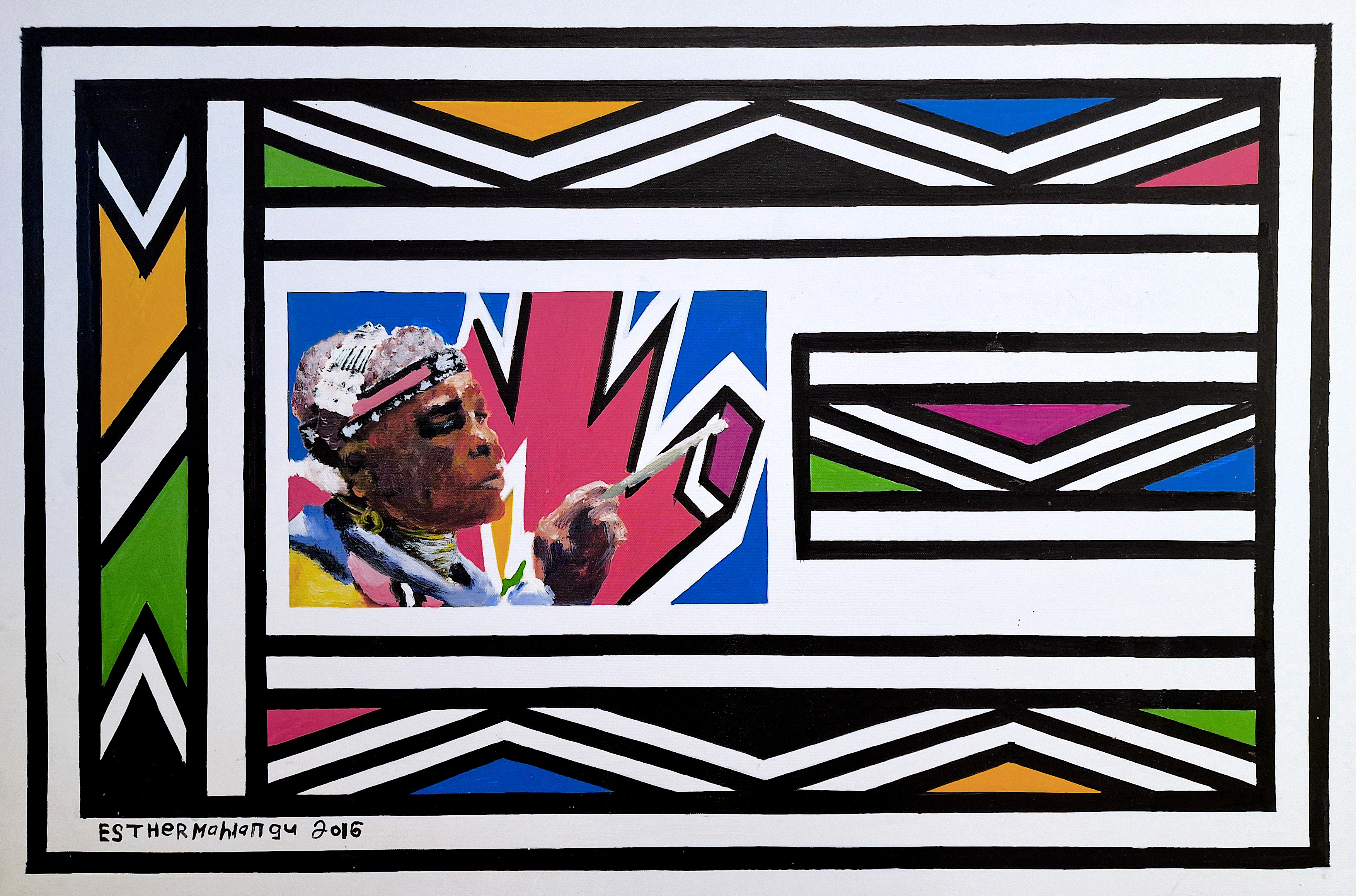


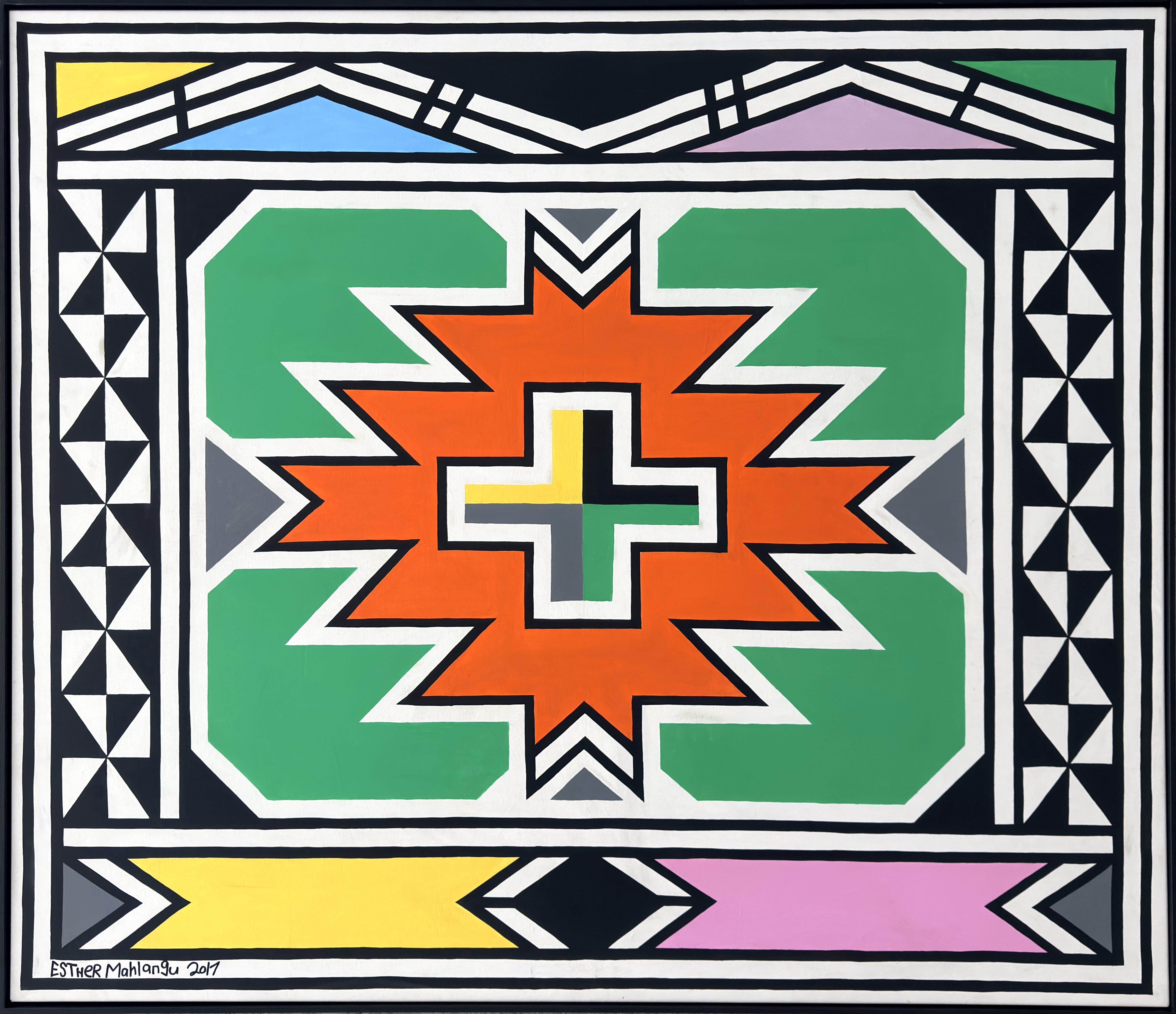
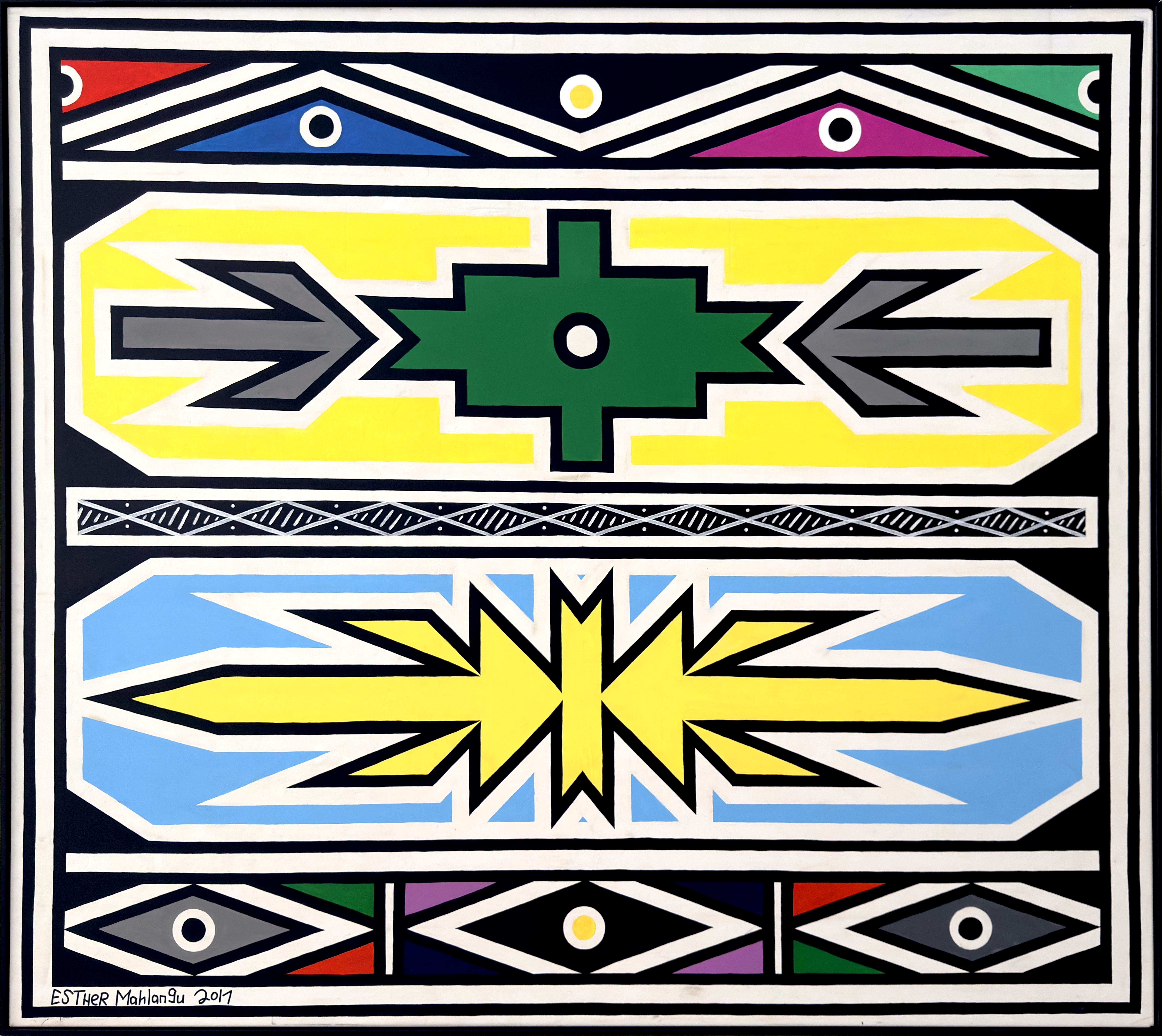
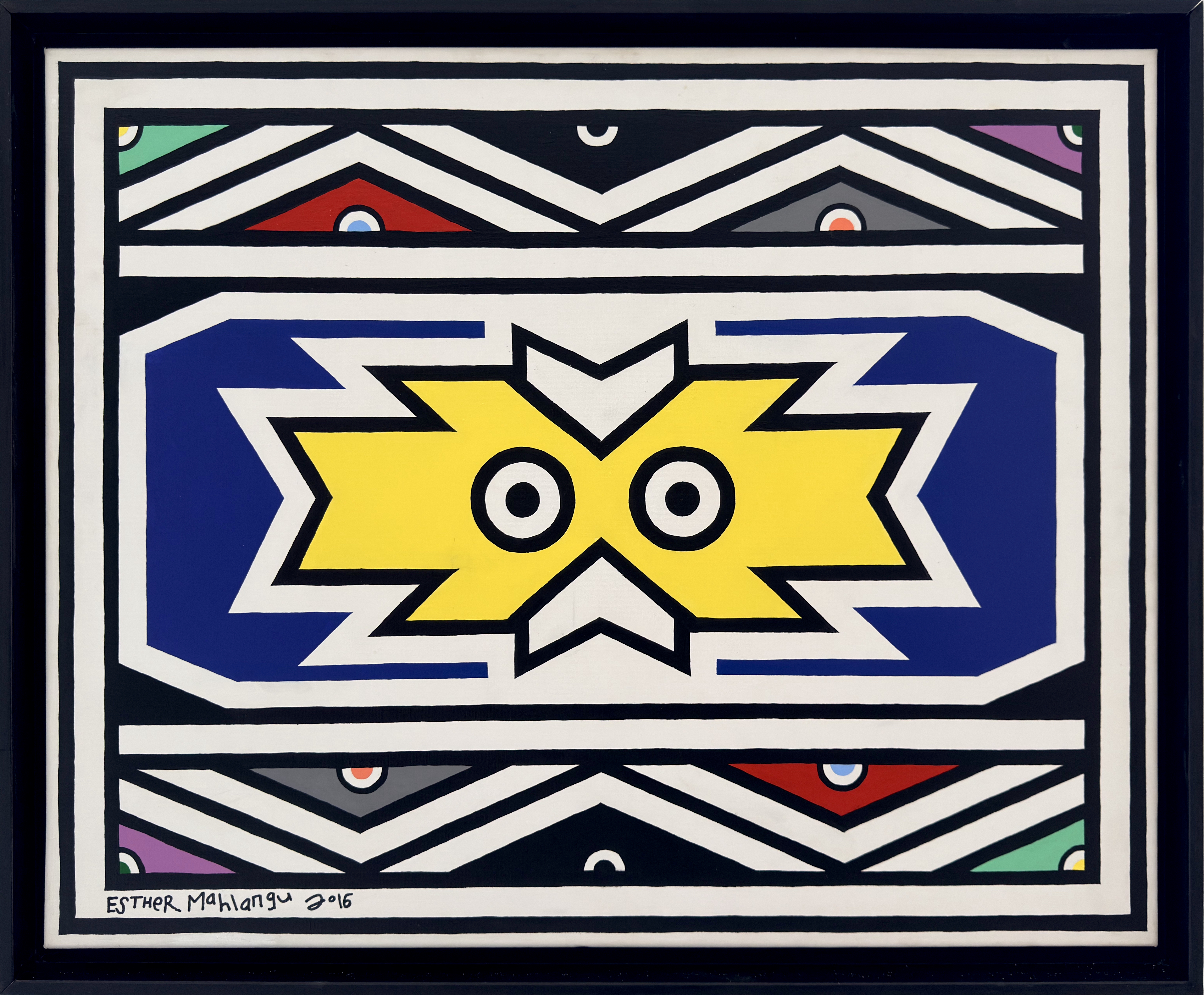

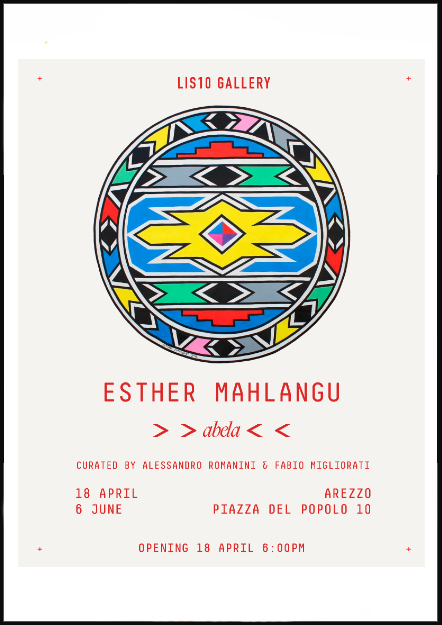
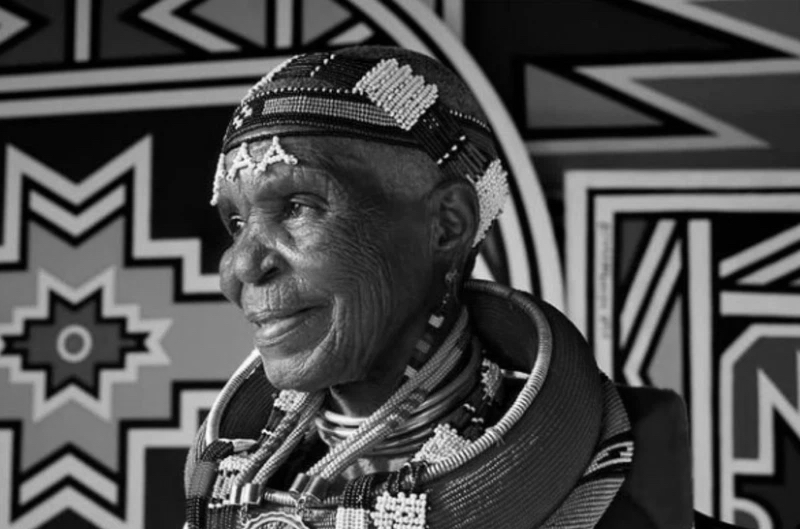
Esther Mahlangu (born 1935 in Middelburg, Mpumalanga, South Africa) is one of the most celebrated contemporary African artists and a key figure in the preservation and global recognition of Ndebele artistic traditions. She grew up in the Ndebele community, where she learned painting as part of a cultural practice traditionally assigned to women. From a young age, she developed her signature precision in geometric linework and bold color composition, originally used to decorate the exterior walls of houses.
Her work gained international recognition in 1989, when she participated in the landmark exhibition “Magiciens de la Terre” at the Centre Pompidou. For the exhibition, she recreated a painted section of her traditional home in front of the audience, introducing global viewers to Ndebele visual language as a living contemporary art form. In 1991, Mahlangu became the first woman and first African artist to design a BMW Art Car, marking a historic moment in the intersection between traditional African art and global industrial design. Her visual language is defined by vibrant geometric patterns, symmetry, and rhythmic abstraction, rooted in Ndebele aesthetics but reinterpreted in contemporary contexts. These patterns are not only decorative but also carry cultural meaning, reflecting identity, community, and continuity.
Over the years, she has collaborated with major international brands including BMW, Belvedere, British Airways, and Rolls-Royce, bringing indigenous African design principles into global visual culture. Her work has also entered prominent private collections, including those of John Legend, Oprah Winfrey, Trevor Noah, and Swizz Beatz. Despite her global recognition, she continues to live and work in Mpumalanga, South Africa, where she remains deeply connected to her community. She also dedicates part of her time to teaching Ndebele painting and beadwork to younger generations, ensuring the transmission of this cultural heritage. Esther Mahlangu’s practice represents a powerful fusion of tradition and contemporary art, positioning indigenous African visual culture within the international art world while preserving its cultural authenticity and identity.